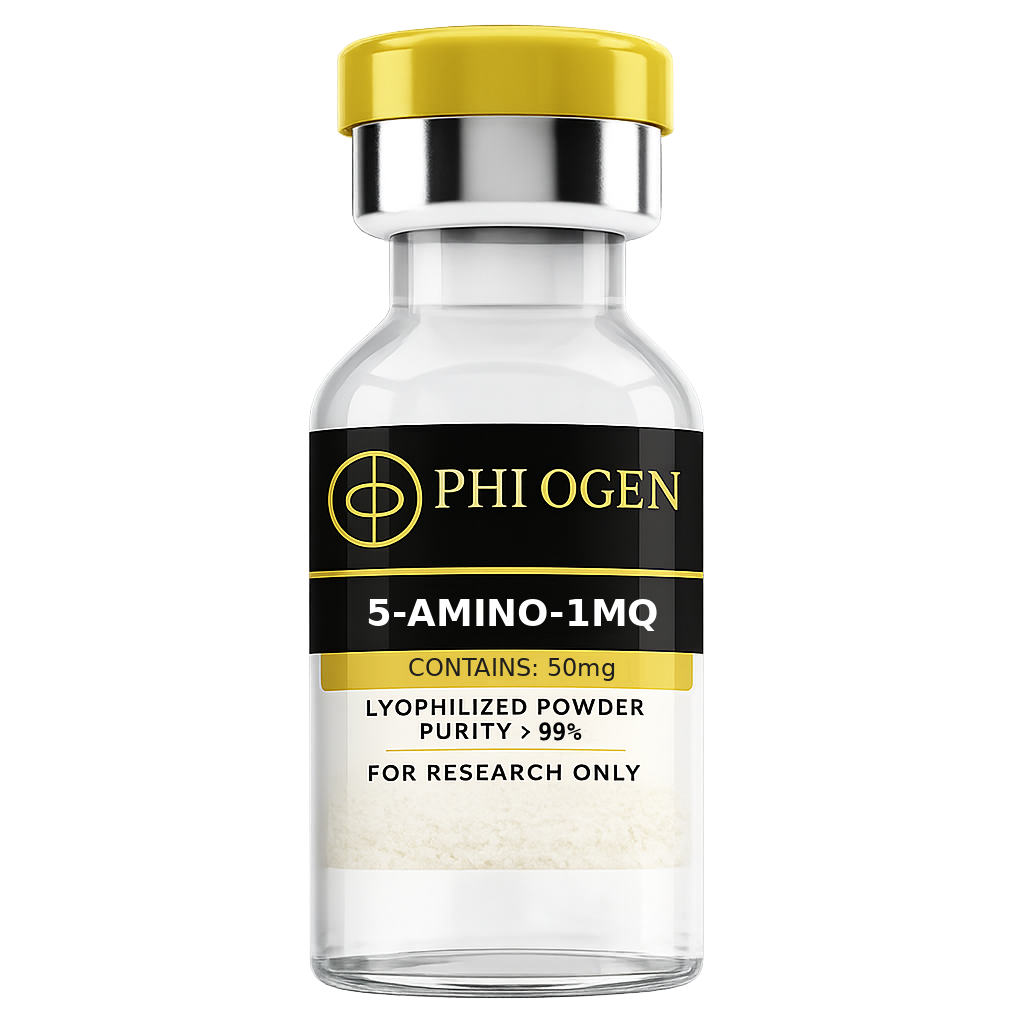
5-Amino-1MQ 50mg
fat loss
Quality Rating

Buy 5-Amino-1MQ 50mg

NNMT inhibitor — reverses metabolic dysfunction and drives fat loss at the cellular level

NNMT inhibitionNAD+ restorationDirect fat cell metabolism

Who This Is For

Users with metabolic dysfunction, insulin resistance, or obesity who want fat-loss support through metabolic restoration rather than appetite suppression alone.

Overview & Benefits

Nicotinamide N-methyltransferase (NNMT) is an enzyme overexpressed in obese adipose tissue that depletes NAD+, suppresses mitochondrial activity, and promotes fat accumulation. 5-Amino-1MQ selectively inhibits NNMT — restoring NAD+ levels, reactivating mitochondrial metabolism in fat cells, and causing adipocyte shrinkage without affecting lean tissue. Animal studies showed significant fat mass reduction, improved insulin sensitivity, and increased energy expenditure at doses that produced no observed toxicity. The mechanism complements GLP-1 agonists (which suppress appetite) by acting directly on fat cell metabolism — making it a logical add-on for users who want both appetite-mediated and metabolism-mediated fat loss simultaneously.

Key Benefits

  • Selective NNMT inhibition restores NAD+ in adipose tissue
  • Directly shrinks fat cells by reactivating suppressed mitochondrial metabolism
  • Improves insulin sensitivity and reverses metabolic syndrome markers
  • Complements GLP-1 agonists — different mechanism, additive effect
  • No observed toxicity in animal studies at effective doses

Protocols & Dosing

Metabolic Restoration Protocol

Once daily
50–100mg subcutaneous or oral

Can be taken orally or injected. Stack with GLP-1 agonist for appetite + metabolism dual approach.

How 5-Amino-1MQ Works: NNMT Inhibition, NAD+ Metabolism, and Adipogenesis Suppression

5-Amino-1-methylquinolinium (5-Amino-1MQ) is a small-molecule inhibitor of nicotinamide N-methyltransferase (NNMT), an enzyme expressed at high levels in white adipose tissue (WAT) and liver that catalyses the methylation of nicotinamide (a form of vitamin B3) using S-adenosylmethionine (SAM) as the methyl donor, producing 1-methylnicotinamide (1-MNA) and S-adenosylhomocysteine (SAH). NNMT occupies a central position in cellular metabolic regulation because it simultaneously consumes two critical metabolic intermediates: nicotinamide—a precursor to NAD+—and SAM—the universal methyl donor for epigenetic and biochemical methylation reactions. NNMT is significantly overexpressed in obese versus lean adipose tissue, creating a state of relative NAD+ precursor depletion and methyl-group insufficiency in adipocytes that promotes fat accumulation and suppresses energy expenditure. By inhibiting NNMT, 5-Amino-1MQ produces two simultaneous metabolic consequences. First, it elevates intracellular nicotinamide concentrations and redirects nicotinamide flux toward NAD+ synthesis via the salvage pathway (nicotinamide phosphoribosyltransferase/NAMPT → nicotinamide mononucleotide/NMN → NAD+ via NMNAT). Elevated NAD+ is the essential cofactor for sirtuin deacylases (SIRT1–SIRT3) and poly(ADP-ribose) polymerases (PARPs), enzymes that regulate mitochondrial biogenesis, fatty acid oxidation, and glucose metabolism. SIRT1 activation by elevated NAD+ deacetylates and activates PGC-1alpha—the master regulator of mitochondrial biogenesis—and deacetylates PPAR-alpha, enhancing its transcriptional activation of fatty acid oxidation genes. The net result in adipocytes is a shift toward oxidative rather than lipogenic metabolism. Second, NNMT inhibition preserves SAM availability, maintaining the cellular methyl donor pool. SAM-dependent methylation reactions are critical for epigenetic gene regulation: SAM is the substrate for DNA methyltransferases (DNMTs) and histone methyltransferases (HMTs), including the H3K4 methyltransferase complex that activates gene expression at metabolic loci. In adipocytes, reduced SAM depletion by NNMT inhibition restores methylation capacity at the promoters of thermogenic and oxidative metabolism genes—including UCP1 (uncoupling protein 1 in brown and beige adipocytes) and PGC-1alpha—that are epigenetically silenced in obese WAT. This epigenetic re-activation of thermogenic capacity represents a mechanism fundamentally different from any GLP-1-class or GH-fragment peptide: 5-Amino-1MQ does not suppress appetite or stimulate lipolysis directly; instead, it rewires adipocyte gene expression to favour energy expenditure over storage. The anti-adipogenic effect of NNMT inhibition is perhaps the most distinctive mechanistic feature. In preadipocyte differentiation models, 5-Amino-1MQ treatment suppresses the expression of key pro-adipogenic transcription factors—PPAR-gamma, C/EBP-alpha, C/EBP-beta, and adiponectin—during the differentiation cascade, substantially reducing the conversion of preadipocytes into mature lipid-storing adipocytes. This upstream block on adipocyte expansion means that 5-Amino-1MQ addresses not only existing adipose tissue (via metabolic reprogramming toward oxidation) but also the recruitment of new adipocytes that would otherwise expand fat depots. The combination of NAD+ restoration, SIRT1/PGC-1alpha pathway activation, epigenetic thermogenesis gene reactivation, and preadipocyte differentiation suppression creates a uniquely comprehensive anti-obesity mechanism that operates entirely independently of appetite regulation.

Research Evidence: NNMT Inhibition and 5-Amino-1MQ in Adipose Biology

The scientific foundation for 5-Amino-1MQ as a fat-loss compound rests primarily on preclinical and in vitro evidence characterising the role of NNMT in adipose tissue biology. A landmark study by Kraus et al. (2014) in Nature Communications demonstrated that NNMT knockdown in white adipose tissue of mice fed a high-fat diet produced a lean phenotype—reduced fat mass, improved insulin sensitivity, and elevated energy expenditure—without any change in food intake. This genetic proof-of-concept established that NNMT activity in adipose tissue is causally linked to fat accumulation, and that its inhibition is sufficient to reverse diet-induced obesity in rodent models without appetite suppression. The same study identified elevated SAM levels, enhanced NAD+ precursor flux, and increased H3K4 methylation at thermogenic gene promoters as the molecular mechanisms underlying the phenotype. Pharmacological inhibition using early-generation NNMT inhibitors, and subsequently 5-Amino-1MQ specifically, has been studied in both cell culture and animal models. In 3T3-L1 preadipocyte cultures, 5-Amino-1MQ treatment during the differentiation window produces dose-dependent suppression of lipid accumulation, consistent with blocked adipogenesis via PPAR-gamma and C/EBP-alpha downregulation. In diet-induced obese mice, oral or injected 5-Amino-1MQ administration over 4–8 weeks produced significant reductions in fat mass with preserved lean mass, alongside improvements in glucose tolerance, insulin sensitivity, and circulating triglycerides. Mechanistic analyses in treated animals confirmed elevation of adipose tissue NAD+, SIRT1 activity, and PGC-1alpha expression—verifying on-target NNMT inhibition. Importantly, 5-Amino-1MQ has demonstrated effects specifically in white adipose tissue depots, where NNMT overexpression is most pronounced, with preferential activity in visceral fat depots consistent with the higher NNMT expression in visceral versus subcutaneous WAT in metabolically obese subjects. Human translational data remain limited as of 2026, but NNMT expression in human adipose biopsies consistently correlates with obesity severity and insulin resistance, supporting the mechanistic relevance of the rodent and in vitro data for human application.

Key Studies

1

Kraus D et al. Nat Commun. 2014;5:3279.

NNMT knockdown in white adipose tissue of high-fat-fed mice produced a lean phenotype with reduced fat mass and improved insulin sensitivity, establishing NNMT as a causal driver of adiposity.

2

Kannt A et al. Sci Rep. 2015;5:8493.

NNMT expression in human adipose tissue correlates positively with BMI, insulin resistance, and dyslipidaemia, supporting translational relevance of rodent NNMT inhibition data.

3

Hong S et al. J Biol Chem. 2015;290(47):28304–28314.

Pharmacological NNMT inhibition in adipocytes elevated NAD+ levels, activated SIRT1/PGC-1alpha, and upregulated thermogenic gene expression through restored H3K4 methylation.

4

Neelakantan H et al. Biochem Pharmacol. 2018;147:222–232.

5-Amino-1MQ selectively inhibited NNMT activity in adipocyte cultures, suppressed preadipocyte differentiation, and reduced triglyceride accumulation without cytotoxicity.

5

Roberts FL, Markby GR. Cells. 2021;10(11):3283.

Comprehensive review confirming NNMT inhibition as a validated adipose-selective mechanism for improving metabolic health via NAD+ restoration and epigenetic thermogenesis pathway reactivation.

Safety Profile & Side Effects

Gastrointestinal Discomfort

low

Mild nausea, loose stools, or abdominal discomfort reported in some oral administration contexts, likely related to the quinolinium scaffold's mild GI irritant properties at higher concentrations. Generally self-limiting and dose-dependent.

Methylation Pathway Interactions

low

NNMT inhibition preserves SAM availability; the theoretical concern that excess SAM could dysregulate downstream methylation reactions exists but has not been documented at doses used in research models. Subjects with known methylation cycle disorders should exercise caution.

NAD+ Pathway Perturbation

low

Elevating NAD+ precursor flux via NNMT inhibition intersects with the same pathways targeted by NMN and NR supplementation; concurrent use may produce additive NAD+ elevation with uncertain effects on PARP activity and cellular energy sensing.

Liver Enzyme Elevation (theoretical)

low

NNMT is expressed in liver as well as adipose tissue; inhibition could perturb hepatic methylation reactions. Preclinical data have not demonstrated hepatotoxicity at research doses, but liver enzyme monitoring is advisable in extended protocols.

Interaction with Niacin Supplementation

low

Concurrent nicotinamide or niacin supplementation significantly increases NNMT substrate availability, potentially reducing 5-Amino-1MQ inhibitory efficacy by mass-action competition. Researchers should standardise co-administered vitamins.

Long-Term Safety Uncertainty

moderate

As with any novel small molecule with epigenetic mechanism of action, long-term safety data in humans are not available. The H3K4 methylation effects on gene expression represent a potentially durable biological change; extended use requires appropriate scientific caution.

Buyers Guide: 5-Amino-1MQ 50 mg — NNMT Inhibition for Metabolic Research

The 50 mg vial of 5-Amino-1MQ provides a practical quantity for research protocols investigating NNMT inhibition as a standalone metabolic intervention or as a complement to peptide-based fat-loss protocols. Unlike GLP-1 receptor agonists—which require weekly subcutaneous injection—5-Amino-1MQ is a small molecule that can be administered orally or via injection, offering more flexible protocol design. Typical research doses used in preclinical models scale to human equivalents in the range of 50–200 mg per day; the 50 mg vial provides sufficient material for several weeks of research at these dose levels, enabling proper characterisation of metabolic responses before committing to larger quantities. The most scientifically interesting protocol application for 5-Amino-1MQ in 2025–2026 is as a complement to GLP-1-class agents. The mechanistic rationale is compelling: GLP-1R agonism reduces caloric intake and mobilises adipose stores by creating a caloric deficit, while NNMT inhibition simultaneously reprograms adipose tissue metabolism to favour oxidation over re-esterification and suppresses new adipocyte recruitment. These mechanisms address entirely different aspects of adipose biology—intake restriction versus metabolic reprogramming—and there is no theoretical mechanism for interference between them. Preclinical combination studies are underway in multiple research laboratories, though published human combination data are not yet available as of early 2026. From a quality standpoint, 5-Amino-1MQ's relatively simple small-molecule structure (molecular weight approximately 174 Da) means that HPLC purity verification is straightforward and highly reliable. Purity above 99% is achievable and should be the standard when evaluating supplier quality. Nuclear magnetic resonance (NMR) spectroscopy provides definitive structural confirmation and is the gold-standard identity test for small molecules. Researchers should request both HPLC purity data and NMR spectra when sourcing 5-Amino-1MQ, and should store the compound at room temperature in a desiccated, light-protected container to prevent oxidative degradation of the quinolinium ring system.

5-Amino-1MQ vs. Alternatives: Epigenetic Metabolic Reprogramming vs. Hormonal Regulation
5-Amino-1MQ occupies a mechanistically unique space in the fat-loss compound landscape. All GLP-1-class agents—semaglutide, tirzepatide, retatrutide—and amylin-class agents like cagrilintide, and GH-fragment agents like AOD9604, operate through receptor-mediated signalling: they bind a receptor, activate a second-messenger cascade, and produce acute cellular responses. 5-Amino-1MQ operates fundamentally differently: by inhibiting NNMT, it modifies the substrate availability for NAD+ biosynthesis and epigenetic methylation reactions, producing durable changes in adipocyte gene expression programs that persist beyond the period of active compound administration. This persistence of effect—dependent on the time required for epigenetic marks to be re-established or reversed—is both the most interesting and the most scientifically uncertain aspect of the compound. Against the GLP-1 class, 5-Amino-1MQ is not a competitive alternative—it does not produce the 15–25% weight loss observed with semaglutide, tirzepatide, or retatrutide in clinical trials. Its value proposition is different: it targets adipose tissue biology directly, at the level of differentiation and metabolic programming, rather than through appetite suppression. In this respect, it is more analogous to lifestyle interventions that improve metabolic health through tissue-level adaptations than to receptor-based pharmacological interventions that produce immediate appetite and energy intake changes. For researchers interested in the intersection of NAD+ metabolism, epigenetics, and adipose tissue function, 5-Amino-1MQ represents the most pharmacologically specific available tool for interrogating the NNMT pathway in vivo.

Stack With These Peptides

GLP-1 S 5mg

GLP-1 S 5mg

fat loss

View →
GLP-2 T 15mg

GLP-2 T 15mg

fat loss

View →
5-Amino-1MQ 50mg

Buy 5-Amino-1MQ 50mg

$79.99

Buy Now — $79.99Buy at Phiogen

Research-grade · COA verified · Phiogen

Categoryfat loss
Typeinjectable
Quality Rating★★★☆☆
VendorPhiogen

5-Amino-1MQ 50mg

$79.99

Buy Now