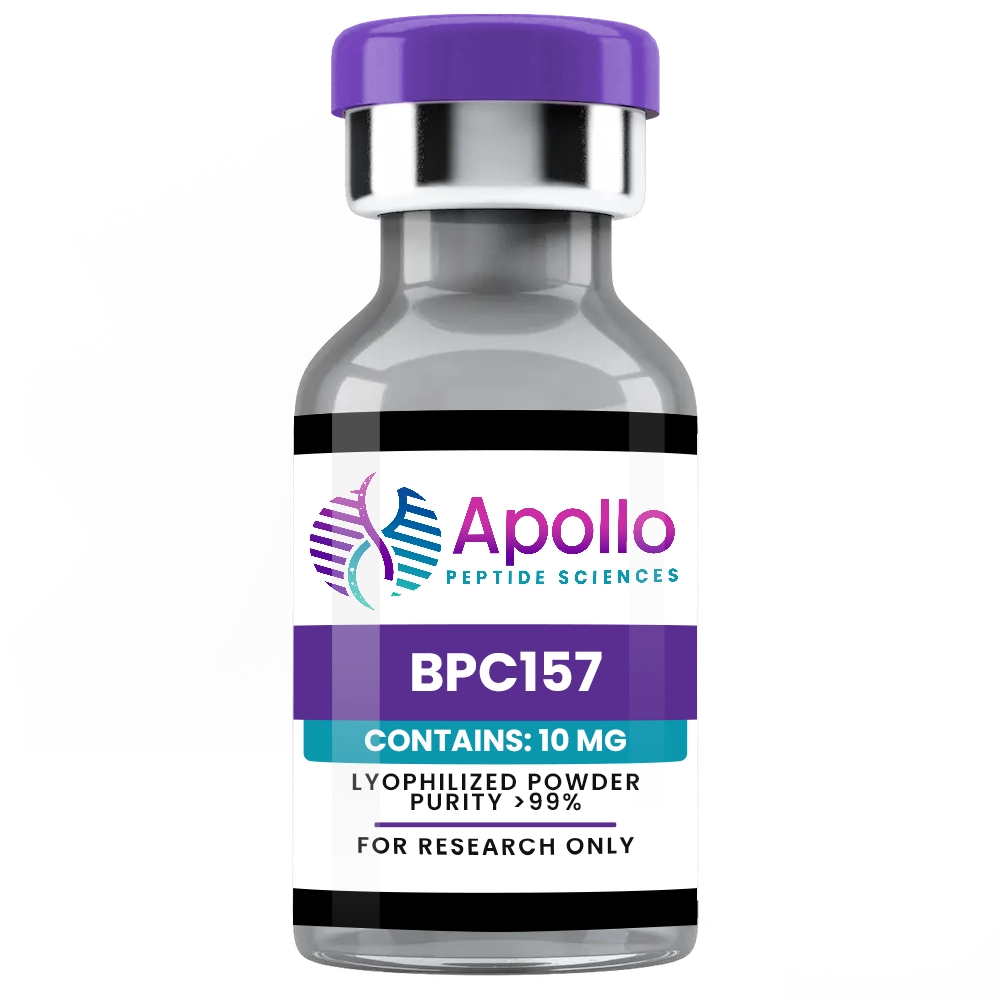
BPC-157 10mg
healing
Quality Rating

Buy BPC-157 10mg

The body's own repair peptide — accelerates healing in tendon, muscle, gut, and nerve tissue

100+ published studiesTendon & gut repairNo hormonal impact

Who This Is For

Athletes and active people dealing with persistent injuries, chronic pain, or gut issues that haven't responded to conventional treatment.

BPC-157 Protocol Snapshot

A 15-amino-acid pentadecapeptide isolated from human gastric juice — backed by 100+ published studies for pleiotropic tissue repair.

Amino acids

15

pentadecapeptide

Published studies

100+

peer-reviewed

Primary mechanism

GHr upregulation

in fibroblasts

Tissues targeted

7+

tendon, gut, nerve, vessel, muscle, bone, skin

Hormonal impact

None

no HPA suppression

Half-life (SC)

~4 hrs

supports twice-daily dosing

Overview & Benefits

Think of BPC-157 as the body's universal first responder — a 15-amino-acid signal peptide that mobilizes healing resources across every tissue type simultaneously. Whether the problem is a torn tendon that hasn't healed after months of physical therapy, a gut lining damaged by years of NSAIDs, or a nerve injury that conventional medicine offers little for, BPC-157 intervenes at the cellular level to accelerate the repair process that should have happened naturally — but didn't. What separates BPC-157 from single-target healing agents is its reach. A joint inflammation compound works on joints. An intestinal supplement works in the gut. BPC-157 does both — and also accelerates muscle repair, promotes nerve regeneration, rebuilds blood vessel networks at injury sites, and moderates the inflammatory cascade that keeps old injuries from fully resolving. It activates the same fibroblasts that lay down new collagen in tendons while simultaneously stimulating the epithelial cell proliferation that patches a damaged intestinal wall. It does this without touching your hormone levels, suppressing your adrenal axis, or creating dependency. The gut application deserves specific attention. BPC-157 counteracts the intestinal damage that NSAIDs cause — a common and underappreciated problem for anyone who regularly uses ibuprofen or naproxen. For leaky gut, IBD, or intestinal permeability issues, oral administration targets the gut tissue directly. For musculoskeletal injuries, subcutaneous injection near the injury site delivers the signal where it's needed most. The flexibility in administration route means BPC-157 adapts to whatever problem you're solving. With over 100 published studies and no observed toxicity at therapeutic doses, BPC-157 has an unusually strong safety record. It doesn't compete with other compounds in your stack, doesn't require cycling off, and produces noticeable results within 2–4 weeks in most applications. For anyone dealing with an injury that hasn't responded to conventional approaches, this is the place to start.

Key Benefits

  • Heals across every tissue type: tendon, ligament, muscle, gut, nerve, and bone simultaneously
  • Builds new blood vessel networks at injury sites — accelerates nutrient delivery to damaged tissue
  • Oral administration heals gut lining directly — effective for leaky gut, IBD, and NSAID damage
  • No hormone suppression, no cycling required, no interactions with other compounds
  • Promotes nerve regeneration in peripheral nerve injuries and spinal damage
  • Reduces chronic inflammation at injury sites without cortisol elevation
  • Noticeable healing acceleration typically within 2–4 weeks of consistent use

Protocols & Dosing

Injury Repair Protocol

Once or twice daily
250–500mcg subcutaneous near injury site

Inject as close to the injured tissue as safely accessible. Use a 29–31g insulin syringe. Run for 4–8 weeks depending on injury severity. Can pair with TB-500 for systemic reach.

Gut Healing Protocol

Once daily on empty stomach
250–500mcg oral (dissolved in bacteriostatic water, swallowed)

Oral route targets gut tissue directly. Take 30 minutes before first meal. Run 4–6 weeks for leaky gut or IBD. Can be combined with KPV for enhanced mucosal repair.

Systemic Maintenance

Once daily
250mcg subcutaneous abdomen

Lower-dose maintenance after acute injury phase. Inject abdomen for systemic distribution. Some users run indefinitely at 250mcg/day; research supports long-term safety.

How BPC-157 Heals Tissue at the Molecular Level

BPC-157 (Body Protection Compound-157) is a synthetic pentadecapeptide derived from a 15-amino-acid sequence isolated from human gastric juice. Its healing properties stem from a multi-pronged interaction with several key molecular systems. Most prominently, BPC-157 upregulates the expression of vascular endothelial growth factor (VEGF) and its receptor VEGFR2, driving the formation of new blood vessels — a process called angiogenesis — into damaged tissue. Without adequate vascularisation, tissue repair stalls; by accelerating capillary ingrowth, BPC-157 restores the oxygen and nutrient supply that healing cells depend on. This mechanism has been repeatedly demonstrated in tendon, ligament, muscle, and gastrointestinal injury models. At the receptor level, BPC-157 interacts with the nitric oxide (NO) system in a particularly important way. It stabilises and activates endothelial nitric oxide synthase (eNOS), increasing local NO production. Nitric oxide is a critical vasodilator and cytoprotective signalling molecule; elevated NO availability at injury sites enhances blood flow, reduces leukocyte adhesion to vessel walls, and modulates the inflammatory milieu to favour resolution rather than chronic inflammation. Separately, BPC-157 has been shown to act on the growth hormone receptor (GHR) pathway — specifically, it sensitises tissues to growth hormone signalling even in the absence of elevated systemic GH levels, amplifying downstream IGF-1 production locally within tendons and ligaments. BPC-157 also influences the cytoskeletal machinery of fibroblasts and tenocytes directly. Studies in primary cell cultures show that it activates FAK (focal adhesion kinase) and paxillin signalling, promoting cell migration into the wound bed and accelerating extracellular matrix (ECM) remodelling. Collagen synthesis is upregulated, and critically the ratio of collagen type I to type III normalises more rapidly, resulting in mechanically stronger scar tissue. There is also evidence of modulation of the TGF-β pathway: BPC-157 appears to fine-tune TGF-β1 signalling, promoting its pro-healing effects while attenuating the fibrotic overdrive that can lead to adhesions and poor-quality repair tissue. Beyond musculoskeletal healing, BPC-157 exerts pronounced cytoprotective effects on gastrointestinal epithelium and the enteric nervous system. It inhibits the NF-κB inflammatory cascade in mucosal cells, reduces oxidative stress via upregulation of superoxide dismutase (SOD) activity, and preserves mitochondrial membrane integrity under ischaemic conditions. This breadth of action — spanning angiogenesis, NO biology, growth factor sensitisation, fibroblast migration, and cytoprotection — explains why BPC-157 demonstrates efficacy across such a wide range of tissue types and injury models.

Research Evidence & Clinical Data for BPC-157

The evidence base for BPC-157 is extensive in preclinical models but remains limited in controlled human trials, a distinction that is important for any serious researcher to internalise. Animal studies, primarily in rats and mice, have demonstrated accelerated healing of transected Achilles tendons, partial medial collateral ligament tears, full-thickness rotator cuff injuries, and crush injuries to skeletal muscle. In these models, histological analysis consistently shows greater collagen fibre alignment, increased vascularity at the repair site, and faster return of tensile strength compared to vehicle-injected controls. Dose-response relationships have been characterised in the nanogram-to-microgram range, with subcutaneous or intraperitoneal injections proximal to the injury site generally producing the strongest local effects. Gastrointestinal research is the most developed area. BPC-157 has shown efficacy against NSAID-induced gastric ulcers, alcohol-induced mucosal damage, and experimental colitis in rodent models, with multiple independent research groups replicating the core findings. A notable feature of this literature is that oral administration appears effective for gut pathology — unusual for a peptide — likely because the GI tract is its native environment. Several studies have examined systemic effects from oral dosing, finding evidence of healing in non-GI tissues as well, though the mechanism of intestinal absorption of intact peptide remains under investigation. Human data is sparse. There are anecdotal case series from sports medicine practitioners and a handful of small observational reports, but no randomised controlled trials published in peer-reviewed journals as of 2025. This absence reflects the compound's status as a research peptide rather than a licensed pharmaceutical, and does not necessarily indicate lack of efficacy — it reflects a lack of investment in clinical development. Researchers working with BPC-157 should situate their work within this preclinical-to-clinical gap and treat all dose extrapolations from rodent models with appropriate caution.

Key Studies

1

Sikiric P et al., Journal of Physiology – Paris (2014)

Demonstrated that BPC-157 accelerated tendon-to-bone healing in a rat model of Achilles tendon transection, with treated animals showing significantly greater tensile strength and organised collagen architecture at 4 weeks post-injury.

2

Chang CH et al., Growth Factors (2011)

Showed BPC-157 upregulated VEGF and VEGFR2 expression in tenocytes and significantly increased in vitro tube formation in endothelial cells, confirming a direct pro-angiogenic mechanism.

3

Sikiric P et al., Current Pharmaceutical Design (2018)

Comprehensive review confirming BPC-157 cytoprotective effects in GI mucosa across multiple ulcer and colitis models, with NO-pathway dependence established by eNOS knockout experiments.

4

Staresinic M et al., Journal of Orthopaedic Research (2003)

Found that local application of BPC-157 to medial collateral ligament injuries in rats accelerated functional recovery and restored near-normal ligament morphology by week 6, versus persistent disorganised repair in controls.

5

Gwyer D et al., Regulatory Peptides (2019)

Systematic review of BPC-157 musculoskeletal literature confirming consistent pro-healing findings across tendon, ligament, muscle, and bone models, while noting the absence of published human trial data.

Safety Profile & Side Effects

Injection Site Reactions

low

Subcutaneous or intramuscular injection may cause transient redness, mild swelling, or bruising at the injection site. These reactions are typically self-limiting and resolve within 24–48 hours without intervention.

Nausea and GI Discomfort

low

A subset of users report mild nausea, particularly when first starting BPC-157. This may relate to the peptide's potent effects on GI motility and mucosal secretion. Reducing dose or taking with food often resolves the issue.

Dizziness or Lightheadedness

low

Transient dizziness has been reported, potentially linked to the peptide's vasodilatory effects via NO upregulation. This is generally mild and brief, but users should avoid operating heavy machinery immediately after dosing until individual response is established.

Theoretical Pro-angiogenic Concern

moderate

Because BPC-157 promotes angiogenesis and growth factor expression, theoretical concern exists regarding its use by individuals with pre-existing tumours or undiagnosed malignancy, where increased blood vessel growth could be counterproductive. This remains theoretical in the context of BPC-157 specifically, but is a standard precaution for all pro-angiogenic agents.

Elevated Mood / Dopaminergic Effects

low

Animal studies have identified BPC-157 interactions with the dopaminergic and serotonergic systems. Some users report mild mood elevation or altered sleep patterns, particularly at higher doses. The clinical significance in humans is not well characterised.

Buyer's Guide: Selecting and Using BPC-157 10mg

BPC-157 is best suited to researchers investigating musculoskeletal tissue repair, GI mucosal healing, or systemic cytoprotection. It is particularly relevant in contexts involving tendon and ligament pathology — historically the slowest-healing tissue types due to poor vascularisation — where its pro-angiogenic mechanism offers a theoretically compelling intervention. Researchers interested in post-surgical recovery models, overuse injury paradigms, or inflammatory bowel disease models will find the existing literature most directly applicable to their work. Quality is the single most important purchasing variable. BPC-157 must be sourced from a manufacturer with third-party HPLC purity verification and mass spectrometry confirmation of molecular weight. The authentic sequence is Gly-Glu-Pro-Pro-Pro-Gly-Lys-Pro-Ala-Asp-Asp-Ala-Gly-Leu-Val (MW ~1,419 Da); a reputable supplier will provide a certificate of analysis confirming sequence integrity and purity ≥98%. Lyophilised powder stored at −20°C is the appropriate format; avoid any product sold in pre-mixed liquid solution, as peptide stability in aqueous solution is significantly reduced. Reconstitution should be performed with bacteriostatic water using a slow, gentle technique to avoid foaming and denaturation. In animal research models, effective doses have ranged from 1–10 mcg/kg administered subcutaneously or intraperitoneally, once or twice daily. Protocols typically run 4–8 weeks depending on the injury model. Researchers should expect meaningful changes in histological outcomes — vascularity, collagen organisation, fibroblast density — within 2–4 weeks at appropriate doses. Functional recovery metrics (tensile strength, range of motion in behavioural assays) tend to lag histological improvement by 1–2 weeks. Given the lack of human dose-finding studies, any extrapolation to human subjects would be speculative and outside the scope of legitimate research use.

BPC-157 vs. Alternative Healing Peptides
The most common comparison is BPC-157 versus TB-500 (Thymosin Beta-4). The two peptides are mechanistically distinct but functionally complementary. BPC-157 exerts its primary effects through angiogenesis, NO signalling, and fibroblast activation, with particularly strong evidence in tendon and GI tissue. TB-500 acts primarily through actin regulation — it sequesters G-actin via a LKKTET motif, modulating cell migration and differentiation — and shows stronger evidence in cardiac and smooth muscle repair. Many researchers combine both peptides ("BPC/TB stack") on the rationale that they address different cellular mechanisms with additive or synergistic potential; animal data does not currently confirm synergy, but neither does it suggest interference. Compared to GHK-Cu, BPC-157 is more specifically focused on injury repair while GHK-Cu has a broader anti-ageing and skin-remodelling profile. For acute musculoskeletal injuries, BPC-157 has a more directly relevant evidence base. KPV, another healing-focused peptide, works almost exclusively via anti-inflammatory pathways (MC1R agonism) rather than structural repair mechanisms, making it a complement rather than a competitor to BPC-157. For researchers focused purely on inflammation control, KPV may be sufficient; for structural healing, BPC-157 provides mechanisms KPV cannot. The decision between these agents ultimately comes down to the specific pathology being modelled and whether the primary target is inflammatory resolution, structural regeneration, or both.

Stack With These Peptides

TB-500 10mg

TB-500 10mg

healing

View →
GHK-CU Copper Peptide 50mg

GHK-CU Copper Peptide 50mg

anti aging

View →
CJC-1295 / Ipamorelin

CJC-1295 / Ipamorelin

performance

View →
BPC-157 10mg

Buy BPC-157 10mg

$59.99

Buy Now — $59.99Buy at Apollo

Research-grade · COA verified · Apollo Peptide Sciences
Categoryhealing
Typeinjectable
Quality Rating★★★★★
VendorApollo

Common Questions About BPC-157 10mg

How long does BPC-157 take to work?

Most users report measurable pain reduction and improved range of motion within 2–4 weeks of daily use at 250–500mcg. For acute injuries the response can begin within the first week. For chronic or long-standing injuries allow 6–8 weeks before evaluating. BPC-157 works faster for localized soft-tissue injuries than for nerve damage or advanced gut pathology, which require longer protocols.

What is the correct BPC-157 dosage?

The standard therapeutic range is 250–500mcg per day injected subcutaneously near the injury site using a 29–31 gauge insulin syringe. For gut healing the same dose can be taken orally on an empty stomach. Start at 250mcg/day and increase to 500mcg after 2 weeks if response is insufficient. Reconstitute the 10mg vial with 2ml bacteriostatic water to get 5,000mcg/ml — a 250mcg dose is then 0.05ml (5 units on a 100-unit syringe).

Can you combine BPC-157 with TB-500?

Yes — this is the gold-standard healing combination. BPC-157 handles local angiogenesis, receptor upregulation, and fibroblast activation at the specific injury site. TB-500 drives systemic stem cell recruitment from any injection site, covering areas BPC-157 cannot efficiently reach locally. Together they address every phase of the repair cascade. Standard combined protocol: BPC-157 at 250–500mcg daily + TB-500 at 2.5mg twice weekly for 6–8 weeks.

BPC-157 10mg

$59.99

Buy Now