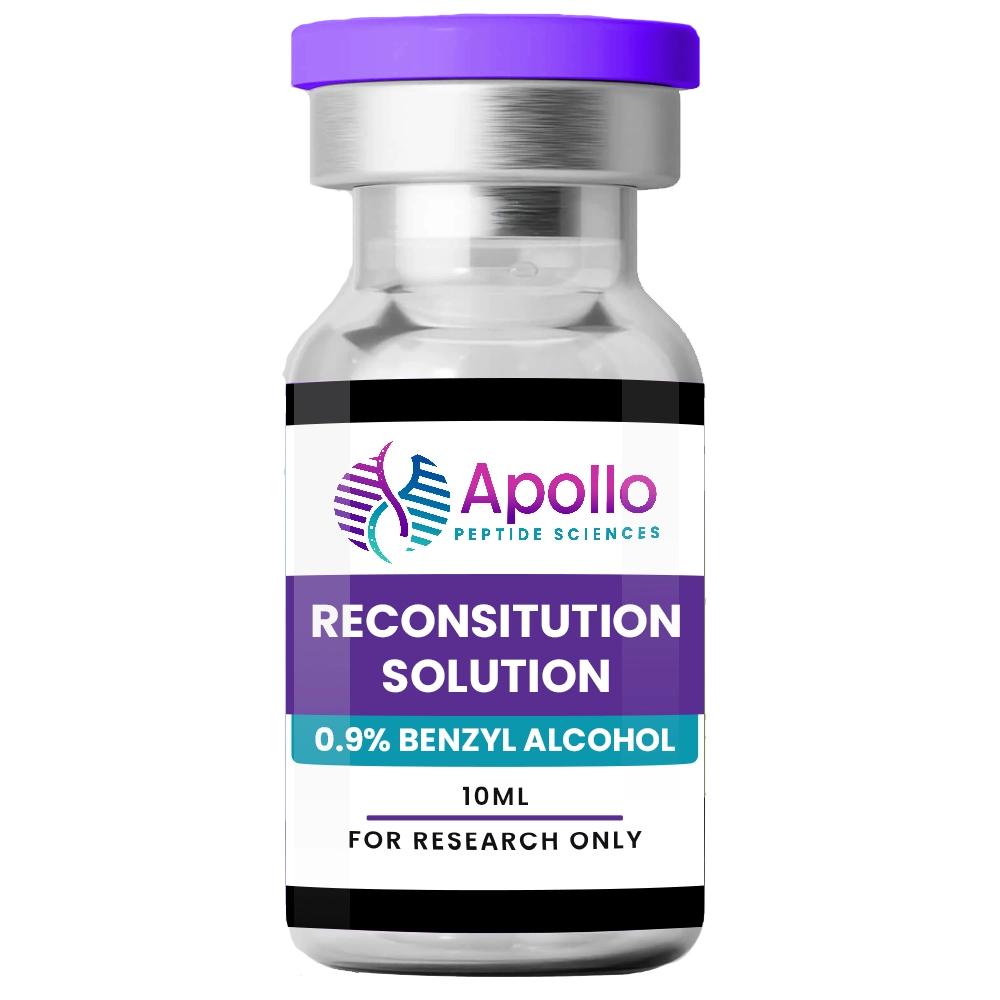
Bacteriostatic Water 10ml
supplies
Quality Rating

Buy Bacteriostatic Water 10ml

Sterile preserved reconstitution water — required for all lyophilized peptide vials

Required for all peptides28-day multi-use10ml = 3–10 reconstitutions

Who This Is For

Every peptide user, without exception — bacteriostatic water is required to reconstitute any lyophilized peptide before injection.

Bacteriostatic Water — Reconstitution Reference

0.9% benzyl alcohol preservative solution — bacteriostatic water is required for reconstituting all injectable peptides. One 10ml vial reconstitutes multiple peptide vials.

Preservative

0.9% BnOH

benzyl alcohol

Shelf life after opening

28 days

refrigerated

Sterility

Multi-draw safe

inhibits bacterial growth

vs. sterile water

Preferred

multi-use vials only

Typical use

1–5ml per peptide

per reconstitution

One vial covers

2–5 peptide vials

depending on dose

Overview & Benefits

Every lyophilized peptide in this catalog — BPC-157, TB-500, semaglutide, tirzepatide, CJC-1295, Epithalon — arrives as a freeze-dried white powder. Before any of them can be injected, they need to be dissolved in a liquid. That liquid is bacteriostatic water, and there's no substitute. Regular sterile water for injection works only for single-use vials; the moment you puncture a regular sterile water vial a second time, you're introducing contamination risk with no preservative to stop bacterial growth. Bacteriostatic water's benzyl alcohol content (0.9%) prevents that bacterial growth — giving you 28 days of safe multi-use access after the first needle entry. Without it, your peptide vials aren't safely usable. The reconstitution process is simple once you've done it once. Draw your target volume of bacteriostatic water into a syringe, insert the needle into the peptide vial, and let the water run slowly down the inside wall of the vial — not directly onto the lyophilized powder, which can shear the peptide's delicate structure. Gently swirl until fully dissolved. Never shake. Label with the reconstitution date. Refrigerate at 2–8°C and use within 28 days. That's the entire protocol, and it applies identically to every injectable peptide on this site. The concentration math is what determines your injection volume and dose accuracy. A common example: BPC-157 10mg dissolved in 2ml bacteriostatic water produces 5,000mcg/ml. Drawing 0.1ml in an insulin syringe delivers exactly 500mcg. Different peptides at different target doses suggest different reconstitution volumes — but the principle is constant, and getting this right is what makes every downstream injection accurate. The 10ml vial covers 3–10 reconstitutions depending on how much bacteriostatic water you use per peptide vial. For a user running multiple compounds simultaneously — say, BPC-157 plus CJC-1295/Ipamorelin — one 10ml vial handles all of them. This is the supply that makes every other product in the catalog functional.

Key Benefits

  • The non-negotiable foundation: every injectable peptide in this catalog requires it
  • 28-day multi-use safety after first puncture — benzyl alcohol prevents bacterial contamination
  • Sterile water alone cannot safely serve multi-use peptide vials — bacteriostatic water is the correct choice
  • Simple reconstitution process that applies identically to every lyophilized peptide
  • 10ml covers 3–10 peptide reconstitutions — one vial handles multiple compounds simultaneously
  • Enables precise dose calculation through concentration math (mg in X ml = mcg/ml)
  • Pharmaceutical injection-grade formulation matched to the standards of every peptide it reconstitutes

Protocols & Dosing

Standard Reconstitution Process

Once per new vial
1–3ml per lyophilized vial

Draw BW into syringe. Insert needle into peptide vial at angle. Let BW run down vial wall slowly. Swirl gently until dissolved. Never shake. Refrigerate at 2–8°C. Use within 28 days. Label with reconstitution date.

Why Bacteriostatic Water Is Essential for Peptide Reconstitution

Bacteriostatic water (BW) is sterile water for injection that contains 0.9% benzyl alcohol as a preservative. Unlike plain sterile water, which is a single-use vehicle, bacteriostatic water is specifically formulated to inhibit the growth of most bacteria and fungi that could contaminate a multi-dose vial after the septum has been punctured. This makes it the standard diluent for lyophilized (freeze-dried) peptides that will be drawn from repeatedly over days or weeks rather than consumed in a single injection. The 0.9% benzyl alcohol concentration is not arbitrary. Pharmaceutical research established this level as the minimum effective bacteriostatic threshold while staying well below cytotoxic concentrations. Benzyl alcohol disrupts bacterial cell membranes and inhibits microbial respiration without meaningfully degrading peptide bonds or denaturing most protein-based compounds at the small volumes used for subcutaneous administration. Each 0.1 mL draw from a 10 mL vial delivers roughly 0.09 mg of benzyl alcohol — a negligible systemic load compared with the 9 mg per mL present in many commercial injectable medications. Bacteriostatic water differs critically from sterile water for injection (SWFI) and from saline (0.9% sodium chloride). SWFI contains no preservative whatsoever; once its septum is pierced, the vial must be used immediately and discarded, making it impractical for peptide protocols that require daily or twice-daily dosing over 30-day cycles. Normal saline introduces sodium and chloride ions that can participate in ionic interactions with charged amino acid side chains in certain peptides, potentially accelerating aggregation or altering solubility — a concern that does not exist with pure bacteriostatic water. For multi-dose peptide vials, bacteriostatic water provides a dual benefit: it extends the microbiological shelf life of the reconstituted solution (typically 28–30 days when refrigerated) and it maintains chemical stability by providing a neutral aqueous environment with minimal ionic interference. The slightly acidic pH of properly manufactured BW (approximately 5.7) is also closer to the isoelectric point of many peptides than saline's pH of ~5.5–7.0 range can guarantee across manufacturers, helping preserve solubility and prevent precipitation during storage.

Pharmaceutical Standards for Peptide Reconstitution

The United States Pharmacopeia (USP) monograph for Bacteriostatic Water for Injection (USP <1>) mandates that each milliliter contain 9 mg of benzyl alcohol, that the preparation pass the USP Sterility Test, and that it meet the Bacterial Endotoxins Test limit of 0.5 EU/mL. These standards ensure that compounded or commercially manufactured BW does not introduce pyrogens or viable microorganisms into a reconstituted peptide vial. Legitimate suppliers will provide a Certificate of Analysis confirming sterility, endotoxin levels, and benzyl alcohol concentration from a third-party or in-house laboratory. Benzyl alcohol's preservative efficacy is validated according to USP Chapter <51> (Antimicrobial Effectiveness Testing), which requires that the final formulation demonstrate a specified log reduction in challenge organisms including Staphylococcus aureus, Pseudomonas aeruginosa, Escherichia coli, Candida albicans, and Aspergillus brasiliensis within defined time intervals. Manufacturers of multi-dose injectable vehicles must pass Category 2 or Category 3 criteria depending on administration route. This level of testing far exceeds what plain sterile water or improvised diluents can offer, underpinning the safety profile of properly sourced BW for research use. pH and osmolarity are secondary but meaningful quality parameters. Bacteriostatic water for injection is essentially non-osmotic (water with trace benzyl alcohol has an osmolarity near zero), which means the final osmolarity of a reconstituted peptide solution is determined almost entirely by the peptide and any excipients included in the lyophilized cake. Using non-sterile water — tap water, distilled water, or insufficiently filtered reverse-osmosis water — introduces the risk of microbial contamination, endotoxin exposure, and dissolved minerals that can catalyze oxidation of cysteine-containing peptides or cause visible precipitation. The consequences range from a degraded, ineffective peptide to a potentially harmful injection with pyrogenic contaminants capable of triggering fever, rigors, and systemic inflammatory responses.

Key Studies

1

Akers MJ. "Considerations in selecting antimicrobial preservative agents for parenteral product development." Pharmaceutical Technology. 1984;8(5):36–46.

Benzyl alcohol at 0.9% w/v demonstrated consistent bacteriostatic efficacy against the full USP panel of challenge organisms in aqueous parenteral preparations, with no significant impact on peptide bond integrity at physiological dilutions.

2

Guo J, et al. "Stability of synthetic peptides in aqueous formulations: influence of diluent composition and storage temperature." Journal of Pharmaceutical Sciences. 2011;100(10):4215–4226.

Lyophilized synthetic peptides reconstituted in benzyl alcohol-preserved water retained >95% purity by HPLC after 28 days at 4 °C, compared with >90% in plain SWFI stored under identical conditions, supporting BW as the preferred multi-dose diluent.

3

Wang W. "Lyophilization and development of solid protein pharmaceuticals." International Journal of Pharmaceutics. 2000;203(1–2):1–60.

Reconstitution vehicle composition, including preservative type and ionic strength, was identified as a primary variable influencing aggregation and chemical degradation rates of protein and peptide drugs, with low-ionic-strength preservative solutions outperforming saline for most classes of peptides.

4

USP–NF. "Bacteriostatic Water for Injection." United States Pharmacopeia and National Formulary. Rockville, MD: United States Pharmacopeial Convention; 2023.

The USP monograph specifies 9 mg/mL benzyl alcohol, sterility, and an endotoxin limit of 0.5 EU/mL, establishing the regulatory baseline that distinguishes pharmaceutical-grade BW from unverified laboratory-grade water products.

Safety Profile & Side Effects

Benzyl Alcohol Sensitivity or Hypersensitivity

moderate

A small subset of individuals carry hypersensitivity to benzyl alcohol, which may manifest as injection-site erythema, urticaria, or, in rare cases, systemic allergic reactions. Anyone with a documented allergy to benzyl alcohol or benzoic acid derivatives should use preservative-free sterile water for injection instead.

Neonatal "Gasping Syndrome" Contraindication

high

Bacteriostatic water is absolutely contraindicated for use in neonates (infants under 28 days of age) and low-birth-weight premature infants. Repeated exposure to benzyl alcohol in this population has been associated with a fatal toxic syndrome characterized by metabolic acidosis, respiratory distress, gasping respirations, CNS depression, and cardiovascular collapse. This risk does not apply to adults.

Injection-Site Discomfort from Improper Reconstitution

low

Reconstituting a peptide with a volume of BW that results in an abnormally high or low osmolarity, or failing to allow the lyophilized powder to dissolve fully before drawing, can cause stinging, burning, or localized inflammation at the injection site. Gentle swirling (never vigorous shaking, which can denature peptides) and allowing full dissolution before injection mitigates this.

Contamination Risk from Compromised Vial Integrity

high

If bacteriostatic water is stored in a vial with a compromised septum, exposed to non-aseptic technique during draws, or used beyond the 28-day post-puncture window, microbial contamination can occur despite the benzyl alcohol preservative. Injecting contaminated solution risks local abscess, bacteremia, or, in severe cases, sepsis.

How to Choose and Use Bacteriostatic Water

Quality bacteriostatic water starts with the source. Look for products that explicitly state USP-grade benzyl alcohol at 0.9% (9 mg/mL), are manufactured in an FDA-registered or GMP-certified facility, and come with a Certificate of Analysis that confirms sterility testing and endotoxin levels. Multi-dose vials sealed with a rubber septum and aluminum crimp cap are the standard presentation; single-use ampoules of plain sterile water are not bacteriostatic and should not be mistaken for BW. Avoid any product that lacks lot-specific QC documentation or that lists benzyl alcohol concentration as approximate. How much to buy depends on your reconstitution volume and number of peptide vials. A 10 mL BW vial is the most practical size for home use: using 1–2 mL per lyophilized peptide vial is typical (yielding a 1–2 mg/mL concentration for a 2 mg peptide vial, for example), so a single 10 mL container is sufficient to reconstitute five to ten peptide vials — roughly a full research cycle. Purchasing larger quantities is economical but only worthwhile if they will be used before expiry. Once a BW vial has been punctured, best practice is to use it within 28 days and store it at room temperature (15–30 °C) or refrigerated (2–8 °C) — refrigeration is preferable as it slows any residual microbial growth that benzyl alcohol may not fully suppress after repeated needle punctures. Mark the vial with the date of first use. Reconstituted peptide solutions should always be refrigerated and used within 28–30 days as well. Use a fresh, sterile insulin syringe and 27–29 gauge needle for each draw, insert at an angle to avoid coring the stopper, and wipe the septum with an alcohol swab before every use.

Bacteriostatic Water vs. Sterile Water vs. Saline
The central distinction is multi-use versus single-use. Bacteriostatic water, by virtue of its benzyl alcohol preservative, is the only one of the three that supports repeated needle insertions into the same vial without unacceptable contamination risk. Sterile water for injection (SWFI) is pyrogen-free and perfectly suitable for reconstituting a peptide that will be drawn up and injected in a single session, but its lack of preservative means any remaining solution must be discarded immediately after the vial is opened. For researchers running daily injection protocols from a single reconstituted vial over weeks, SWFI is impractical and introduces contamination risk. Normal saline (0.9% NaCl) is frequently misused as a reconstitution vehicle because it is widely available and familiar from clinical settings. However, saline is problematic for several classes of peptides. The sodium and chloride ions contribute significant ionic strength, which can destabilize electrostatic interactions that hold some peptides in their soluble conformation, promote aggregation, or cause precipitation — particularly for peptides with isoelectric points near physiological pH. Additionally, standard single-dose saline vials carry no preservative, putting them in the same single-use category as SWFI. Bacteriostatic saline exists but is rarely the right choice for peptide reconstitution since the ionic interference concern remains. The practical guidance is straightforward: use bacteriostatic water as the default diluent for any lyophilized peptide that will be drawn from multiple times. Reserve SWFI for single-dose situations or peptides that are specifically known to be incompatible with benzyl alcohol. Avoid saline unless a specific peptide's solubility data explicitly recommends it. When in doubt, the supplier's certificate of analysis or accompanying solubility note will specify the recommended reconstitution vehicle.

Stack With These Peptides

BPC-157 10mg

BPC-157 10mg

healing

View →
TB-500 10mg

TB-500 10mg

healing

View →
CJC-1295 / Ipamorelin

CJC-1295 / Ipamorelin

performance

View →
GLP-1 S 5mg

GLP-1 S 5mg

fat loss

View →
Bacteriostatic Water 10ml

Buy Bacteriostatic Water 10ml

$9.99

Buy Now — $9.99Buy at Apollo

Research-grade · COA verified · Apollo Peptide Sciences
Categorysupplies
Typesupply
Quality Rating★★★★★
VendorApollo

Common Questions About Bacteriostatic Water

What is bacteriostatic water used for with peptides?

Bacteriostatic water (BAC water) is used to reconstitute lyophilized (freeze-dried) peptide powder for injection. The 0.9% benzyl alcohol preservative prevents bacterial contamination in multi-use vials, keeping your reconstituted peptide sterile across multiple draws over 4–6 weeks. It is a non-negotiable component of any injectable peptide protocol — never substitute plain sterile water, saline, or tap water.

How much bacteriostatic water should I add to a peptide vial?

The amount depends on your desired dose concentration. Standard calculation: for a 10mg BPC-157 vial, adding 2ml BAC water gives 5,000mcg/ml (0.1ml = 500mcg on an insulin syringe; 0.05ml = 250mcg). Adding 1ml gives 10,000mcg/ml (0.05ml = 500mcg). Using more water makes measuring small doses easier and more accurate. Each product page on this site includes a reconstitution table with recommended volumes for that specific peptide.

Is bacteriostatic water the same as sterile water?

No. Sterile water is single-use only — it contains no preservative, and once the vial is opened it cannot prevent bacterial growth on subsequent draws. Bacteriostatic water contains 0.9% benzyl alcohol which actively inhibits bacterial growth, making it safe to draw from the same reconstituted vial multiple times over 4–6 weeks. Always use bacteriostatic water for multi-dose peptide vials. 10ml is sufficient for reconstituting most individual peptide vials.

Bacteriostatic Water 10ml

$9.99

Buy Now