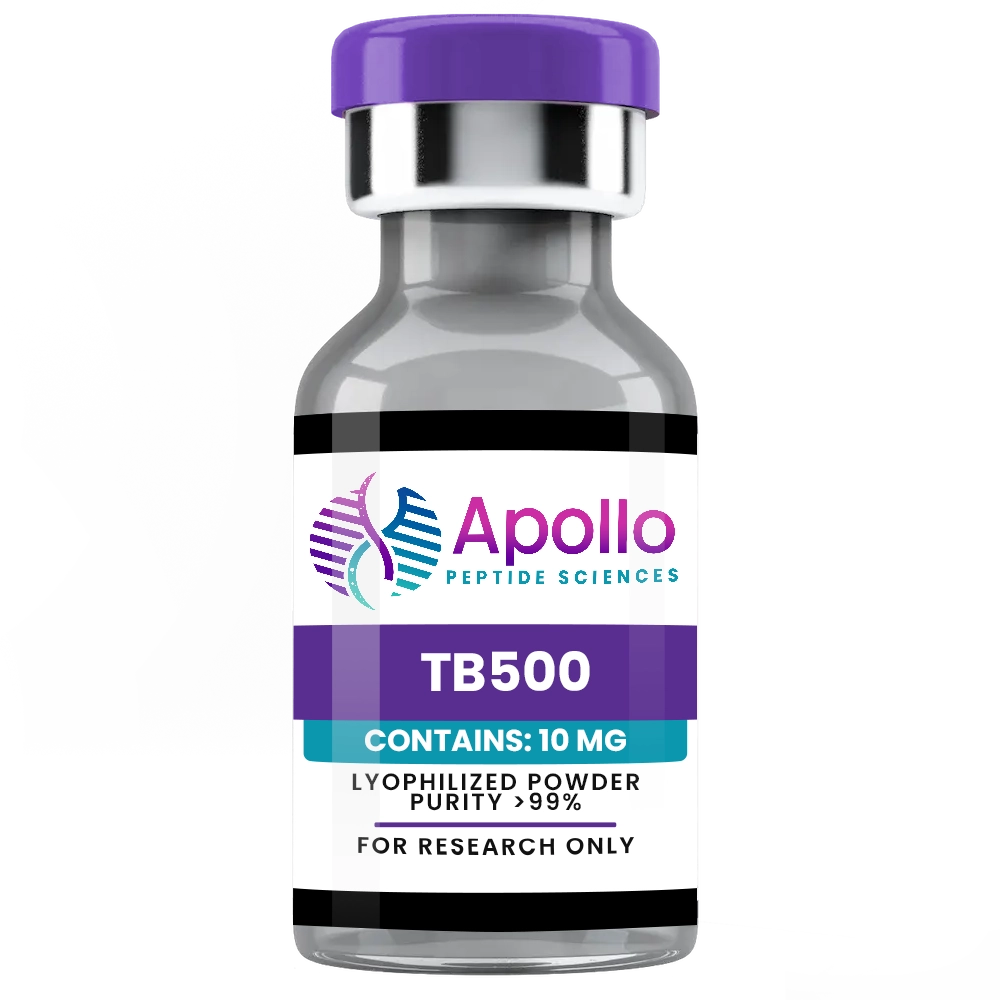
TB-500 10mg
healing
Quality Rating

Buy TB-500 10mg

Systemic tissue repair peptide — regenerates muscle, accelerates recovery, reduces inflammation body-wide

Systemic healing reachStem cell recruitmentGold standard with BPC-157

Who This Is For

Serious athletes and active people with significant soft tissue injuries — especially those involving deep tissue, tendons, or areas where local injection isn't practical.

TB-500 Protocol Snapshot

Synthetic Thymosin Beta-4 — a 43-amino-acid protein produced by every nucleated cell in response to injury. Delivers systemic healing from any injection site.

Amino acids

43

Thymosin Beta-4 analog

Mechanism

Actin sequestration

enables cell migration

Healing reach

Systemic

any injection site

Recovery boost

30–50%

faster recovery time

Proven use

Elite sports

tendon & ligament repair

Stack partner

BPC-157

gold standard combo

Overview & Benefits

TB-500 earned its reputation in elite sport — and for good reason. As a synthetic version of Thymosin Beta-4, a protein naturally triggered by injury in every cell of the body, TB-500 has been the compound of choice for professional athletes dealing with tendon and ligament injuries that needed to heal on an accelerated timeline. Its defining characteristic is reach: inject it anywhere and it works everywhere. That systemic delivery makes it particularly valuable for the injuries that are hardest to treat locally — deep tissue tears, distributed overtraining damage, spinal injuries, and anything where a needle near the site simply isn't practical. The mechanism driving this systemic reach is actin sequestration and directed cell migration. TB-500 binds G-actin and modulates actin polymerization dynamics, which fundamentally controls how cells move. The practical result is that stem cells and progenitor cells migrate to injury sites at dramatically accelerated rates — the body's repair workforce gets to the construction zone faster. Simultaneously, TB-500 upregulates the matrix metalloproteinases that remodel damaged tissue architecture, rebuilding the structural integrity of tendons, ligaments, and muscle fascia more rapidly than the body would manage unassisted. The elite performance world has documented 30–50% reductions in recovery time from serious tendon and ligament injuries with TB-500 protocols. This isn't a marginal improvement — it's the difference between a 12-week and a 20-week recovery for a significant soft tissue injury. For recreational athletes and active people who simply can't afford extended time off from training, this compression of recovery time changes what's possible. When paired with BPC-157, TB-500 completes a two-sided healing approach: BPC-157 handles local angiogenesis and receptor signaling at the specific injury site while TB-500 drives systemic stem cell recruitment and matrix remodeling. Run together for 6–8 weeks, this combination addresses every phase of the tissue repair process in a way neither compound achieves alone.

Key Benefits

  • Systemic delivery from any injection site — ideal for injuries that can't be injected locally
  • Accelerates stem cell and progenitor cell migration to injury sites
  • Documented 30–50% reduction in recovery time for tendon and ligament injuries
  • Remodels damaged extracellular matrix architecture for full structural repair
  • Reduces inflammation systemically by downregulating pro-inflammatory cytokines
  • Restores flexibility and reduces tissue stiffness in post-injury fibrosis
  • The essential complement to BPC-157 — together they cover the full repair cascade

Protocols & Dosing

Loading Phase (Weeks 1–4)

Twice weekly
2.0–2.5mg subcutaneous or IM

Can inject anywhere — abdomen, thigh, or shoulder are common. Loading phase saturates the system for maximum effect. No need to inject near the injury site.

Maintenance Phase (Weeks 5–8)

Once weekly
2.0mg subcutaneous

After loading phase, maintain with once-weekly injection. Can extend maintenance phase indefinitely at this dose. Pair with BPC-157 during loading for optimal results.

How TB-500 Promotes Healing Through Actin Regulation and Cell Migration

TB-500 is a synthetic analogue of Thymosin Beta-4 (Tβ4), a naturally occurring 43-amino-acid protein found at high concentrations in platelets, wound fluid, and virtually all nucleated mammalian cells. The peptide used in research is typically the active fragment corresponding to amino acids 17–23 of the full Tβ4 sequence, containing the actin-binding tetrapeptide LKKTET. This sequence is the mechanistic core of TB-500's biological activity: it binds monomeric G-actin with high affinity, sequestering it from incorporation into filamentous F-actin. By modulating the G-actin/F-actin equilibrium, TB-500 profoundly influences the cytoskeletal dynamics that govern cell motility, division, and differentiation. The downstream consequences of this actin modulation are wide-ranging. Keratinocytes, fibroblasts, endothelial cells, and macrophages all require rapid cytoskeletal reorganisation to migrate into wound beds. TB-500 accelerates this migration by maintaining a large pool of available G-actin for rapid polymerisation at the leading edge of migrating cells. This mechanism is particularly important in tissues where the default healing response is slow and disorganised — notably in the myocardium, which has limited regenerative capacity, and in skeletal muscle following crush or ischaemia/reperfusion injury. Animal studies have documented substantial reductions in infarct size and improvement in left ventricular function when TB-500 or full-length Tβ4 is administered within hours of experimental myocardial infarction. Beyond cell migration, TB-500 activates the PI3K/Akt signalling axis downstream of integrin engagement. Akt phosphorylation promotes cell survival under stress conditions (anti-apoptotic signalling), stimulates protein synthesis via mTOR, and enhances mitochondrial biogenesis — all processes that contribute to tissue regeneration rather than scar formation. TB-500 also induces upregulation of MMP-2 (matrix metalloproteinase-2), facilitating breakdown of provisional fibrin matrix and enabling organised ECM remodelling. The net effect is a shift from disorganised scar deposition toward functional tissue regeneration, with improved angiogenesis as an additional consequence of endothelial cell mobilisation. Immunomodulatory properties add a fourth dimension to TB-500's mechanism. It downregulates TNF-α and IL-6 production by activated macrophages while upregulating the anti-inflammatory cytokine IL-10, steering the wound environment away from chronic inflammation. This is distinct from simple immunosuppression: TB-500 appears to facilitate the M1-to-M2 macrophage phenotype transition that characterises normal healing progression. Together, these four mechanisms — actin regulation, PI3K/Akt activation, MMP-mediated matrix remodelling, and macrophage phenotype modulation — make TB-500 one of the most mechanistically comprehensive healing peptides in the research landscape.

Research Evidence & Clinical Data for TB-500

The preclinical evidence for TB-500 / Thymosin Beta-4 spans multiple tissue types and is among the strongest of any peptide in the healing category. Cardiac research has been particularly productive: multiple independent groups have demonstrated that systemic or local delivery of Tβ4 following experimental myocardial infarction in rodents reduces infarct size by 25–40%, preserves ejection fraction, and promotes epicardial-derived progenitor cell activation — a key step in the limited cardiac regeneration capacity that exists in mammals. These findings stimulated early-phase clinical interest, with Tβ4 (as RegeneRx's RGN-352) entering Phase II trials for anterior ST-elevation MI patients. While the full trial results were not unambiguously positive on all primary endpoints, they did confirm safety and tolerability and showed trends toward benefit on secondary functional measures. In musculoskeletal models, TB-500 has demonstrated accelerated healing in full-thickness tendon injuries, dermal wounds, and corneal epithelial repair. The corneal data is notable because it led to the only completed human trial: a Phase II study of topical Tβ4 (RGN-259) for dry eye and neurotrophic keratopathy, which showed statistically significant improvements in corneal healing endpoints compared to placebo. This represents the only positive controlled human data for a Tβ4-based intervention, though the topical ocular context differs substantially from the systemic musculoskeletal applications most researchers are interested in. Animal data for skeletal muscle repair shows consistent benefits in reducing fibrosis, accelerating functional recovery, and increasing satellite cell proliferation at injury sites. The anti-fibrotic effect is considered particularly valuable, as excessive scar formation in muscle impairs contractile function and predisposes to re-injury. The dose-response relationship established in rodents spans 1–6 mg/kg, with twice-weekly systemic administration being the most commonly used protocol. Extrapolation of these doses to higher mammals requires careful body surface area correction, and the absence of pharmacokinetic data in humans makes any dosing extrapolation inherently uncertain.

Key Studies

1

Bock-Marquette I et al., Nature (2004)

Demonstrated that Thymosin Beta-4 activates cardiac progenitor cells and significantly reduces infarct size following experimental MI in mice, establishing the foundational mechanism for TB-500's cardiac healing potential.

2

Goldstein AL et al., Annals of the New York Academy of Sciences (2012)

Comprehensive review confirming Tβ4/TB-500 wound healing, anti-inflammatory, and tissue-regenerative effects across skin, cardiac, CNS, and musculoskeletal models, with discussion of ongoing clinical development.

3

Philp D et al., Journal of Cell Science (2004)

Showed TB-500's LKKTET motif is both necessary and sufficient for accelerating dermal wound closure in mouse models, identifying actin sequestration as the primary molecular mechanism.

4

Sosne G et al., Investigative Ophthalmology & Visual Science (2010)

Phase II clinical data showing topical Tβ4 (RGN-259) significantly improved corneal healing markers in patients with neurotrophic keratopathy compared to vehicle control, representing the strongest human evidence for Tβ4 efficacy.

5

Ho EN et al., Drug Testing and Analysis (2012)

Characterised TB-500 as a prohibited substance in competitive sport following detection of its use by athletes, with analytical methods developed for urine and blood matrices — indirectly confirming its widespread use in performance contexts.

Safety Profile & Side Effects

Injection Site Irritation

low

As with all subcutaneous injectables, localised redness, warmth, and mild swelling at the injection site are the most commonly reported adverse effects. Rotating injection sites and using proper sterile technique minimises this risk.

Fatigue and Lethargy

low

Some users report transient fatigue or lethargy in the 24–48 hours following injection, particularly at higher doses. This may reflect the peptide's systemic immunomodulatory effects. The symptom is generally mild and resolves without intervention.

Headache

low

Mild headaches have been reported at higher doses, potentially linked to vascular effects. Adequate hydration prior to and following administration may reduce incidence. Persistent or severe headache warrants cessation and medical evaluation.

Potential Tumour Growth Concern

moderate

Because Tβ4 promotes angiogenesis and cell migration, there is a theoretical concern — consistent with other angiogenic peptides — that it could accelerate growth in pre-existing malignancies. No direct evidence of tumour promotion has been observed in standard toxicology studies, but researchers should consider this precaution relevant.

Nausea

low

Nausea has been reported, typically at higher doses or with rapid administration. Slow, controlled injection technique and moderate dosing typically prevents this. It is generally transient and self-limiting.

Buyer's Guide: Selecting and Using TB-500 10mg

TB-500 at 10mg vials is well-suited for research protocols examining musculoskeletal tissue regeneration, cardiac healing, dermal wound repair, or anti-fibrotic interventions. Given its established mechanism in cell migration and actin dynamics, it is most applicable to injury models where cellular recruitment to the wound bed is a rate-limiting step — which encompasses most tendon, muscle, and ligament repair paradigms. Researchers interested in the myocardial repair literature will also find 10mg vials appropriate for rodent dosing at the 1–6 mg/kg range commonly used in published protocols. Purity is critical. TB-500 should be sourced only from suppliers providing third-party mass spectrometry confirming the exact 43-amino-acid sequence of Thymosin Beta-4 or the specified active fragment, along with HPLC chromatograms showing ≥98% purity. The authentic molecular weight is approximately 4,963 Da for full Tβ4; some suppliers sell shorter fragments under the TB-500 name — verify the exact sequence via CoA before use. Lyophilised powder reconstituted with bacteriostatic water is the appropriate form; stability in solution is limited, and reconstituted peptide should be used within 2–4 weeks when stored at 4°C or divided into aliquots for −20°C storage. Research protocols in rodents most commonly use twice-weekly subcutaneous injections at 1–2.5 mg/kg over 4–8 weeks. Histological outcomes (fibrosis quantification, vessel density, satellite cell count) typically show significant differences from control at the 4-week mark, with functional outcomes (force production, behavioural assays) generally requiring 6–8 weeks to reach statistical significance. Researchers stacking TB-500 with BPC-157 should note that no established interaction data exists; independent dosing of each compound is the standard approach in combined protocols.

TB-500 vs. BPC-157 and Other Healing Agents
TB-500 and BPC-157 are the two most researched peptides in the acute tissue repair category, and their comparison is the most clinically relevant one for most researchers. Their mechanisms are genuinely distinct: BPC-157 centres on angiogenesis via VEGF/VEGFR2 and NO pathway modulation, while TB-500 is primarily a cell migration facilitator via actin sequestration and PI3K/Akt activation. In tendon healing, both agents have strong evidence, but their cellular targets differ — BPC-157 acts more on tenocytes and endothelial cells, while TB-500 appears to have additional benefit in satellite cell activation relevant to muscle repair. For cardiac injury models, TB-500 has substantially more published evidence than BPC-157 and would be the primary choice. Against GHK-Cu, TB-500 is a more potent acute repair agent but GHK-Cu offers broader anti-ageing, antioxidant, and remodelling effects that may be preferable in chronic or systemic applications. For researchers interested in anti-fibrotic outcomes specifically — where excessive collagen deposition impairs tissue function — TB-500's MMP-2 upregulation and macrophage phenotype modulation make it one of the strongest options available, outperforming most anti-inflammatory peptides in this specific regard. The combination of TB-500 with BPC-157 and GHK-Cu covers all three phases of tissue repair — cell migration and stem cell homing (TB-500), angiogenesis and growth factor activation (BPC-157), and collagen remodelling and gene expression reset (GHK-Cu) — making it the most complete healing stack available.

Stack With These Peptides

BPC-157 10mg

BPC-157 10mg

healing

View →
GHK-CU Copper Peptide 50mg

GHK-CU Copper Peptide 50mg

anti aging

View →
IGF-1 LR3

IGF-1 LR3

performance

View →
TB-500 10mg

Buy TB-500 10mg

$59.99

Buy Now — $59.99Buy at Apollo

Research-grade · COA verified · Apollo Peptide Sciences
Categoryhealing
Typeinjectable
Quality Rating★★★★★
VendorApollo

Common Questions About TB-500 10mg

What is TB-500 used for?

TB-500 is used for systemic tissue repair and accelerated recovery from injuries involving tendons, ligaments, and muscle. Its defining advantage is systemic delivery — injected anywhere, it distributes throughout the body and recruits stem cells to injury sites across the whole system. This makes it uniquely effective for deep tissue injuries, spinal issues, and widespread overtraining damage that cannot be easily targeted with a local injection.

What is the TB-500 dosage protocol?

Loading phase: 2.5mg (2,500mcg) injected subcutaneously twice per week for 4–6 weeks. Maintenance phase: 2.5mg once every 1–2 weeks ongoing. Reconstitute the 10mg vial with 2ml bacteriostatic water to get 5,000mcg/ml — a 2.5mg dose is then 0.5ml. For maximum effect pair with BPC-157 at 250–500mcg daily throughout the loading phase.

How long does TB-500 take to work?

TB-500 reaches peak effect during the loading phase — most users report the most significant recovery acceleration between weeks 3 and 5 of the twice-weekly injection schedule. This differs from BPC-157 which shows faster initial local response. TB-500 builds systemic efficacy across the loading period rather than producing immediate localized effects, making the full 6-week loading phase essential for evaluating results.

TB-500 10mg

$59.99

Buy Now