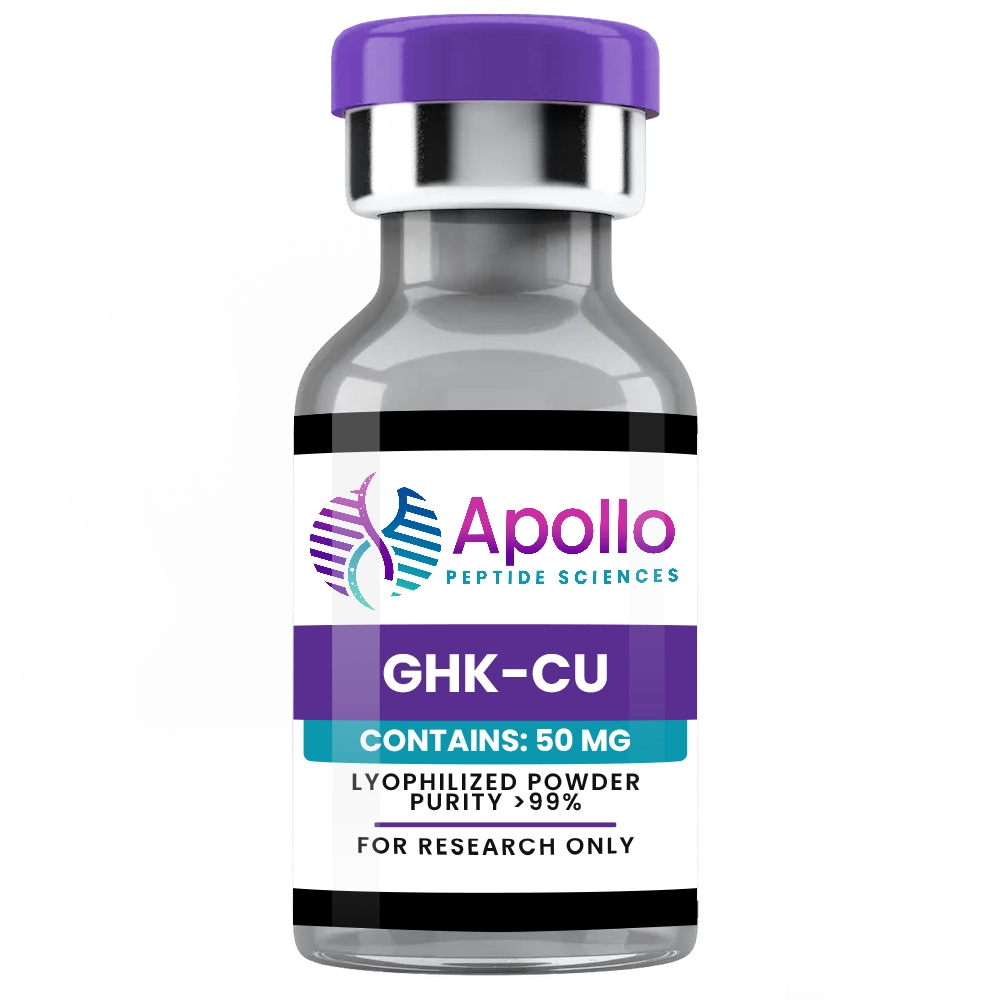
Buy GHK-CU Copper Peptide 50mg
Copper tripeptide that regulates 4,000+ genes — anti-aging, wound healing, and collagen synthesis
Who This Is For
People pursuing comprehensive anti-aging protocols or advanced healing stacks who want a single compound with the widest possible biological reach.
GHK-CU — Gene Expression Data
GHK (Gly-His-Lys) copper complex — a naturally occurring tripeptide found in human plasma that modulates over 4,000 genes and declines sharply with age.
Genes modulated
4,000+
genomic analysis
Plasma level at 20
200 ng/mL
declines to 80 by 60
Collagen production
+300%
in dermal fibroblasts
Anti-inflammatory
12 cytokines
downregulated
Routes
SC + topical
dual administration
Skin application
SNAP-8 stack
copper + SNAP-8 combo
Overview & Benefits
Key Benefits
- Modulates 4,000+ human genes — the broadest biological reach of any peptide available
- Simultaneously builds new collagen/elastin while blocking enzymes that break down skin structure
- Covers the collagen remodeling phase of healing — the critical final stage BPC-157/TB-500 don't fully address
- Reverses aging gene expression patterns — shifts cellular programming toward a younger phenotype
- Drives angiogenesis and blood vessel repair in both skin and deeper injured tissue
- Neuroprotective: upregulates NGF and BDNF expression for nerve health and brain support
- Effective both topically for skin and subcutaneously for systemic anti-aging and healing effects
Protocols & Dosing
Systemic Anti-Aging Protocol
Once dailyRun 8–12 week cycles with 4–8 weeks off. Can combine with Epithalon for comprehensive longevity protocol. Some users report improved skin appearance within 4–6 weeks.
Wound & Injury Healing Protocol
Twice dailyUse alongside BPC-157 and TB-500 for maximum healing. Local injection near the wound provides direct collagen remodeling stimulus. Systemic dose provides anti-inflammatory coverage.
How GHK-Cu Copper Peptide Remodels Tissue and Reverses Biological Ageing
Research Evidence & Clinical Data for GHK-Cu
Key Studies
Pickart L et al., Journal of Biomolecular Structure & Dynamics (2012)
Microarray analysis revealed GHK-Cu modulates expression of 4,028 human genes, significantly reversing age-associated gene expression patterns and activating Nrf2-dependent antioxidant pathways.
Leyden JJ et al., Cosmetics & Toiletries (1990)
Double-blind clinical trial showing topical GHK-Cu improved skin laxity, density, and fine lines comparable to retinoic acid over 12 weeks, with significantly fewer irritation events.
Buffoni F et al., Archives of Dermatological Research (1995)
Demonstrated GHK-Cu accelerated full-thickness wound healing in rats through increased collagen synthesis, improved fibroblast proliferation, and enhanced angiogenesis at wound margins.
Pickart L & Margolina A, Biomolecules (2018)
Review of GHK-Cu's neuroprotective properties, documenting upregulation of NGF and BDNF, promotion of neurite outgrowth, and protective effects in models of Parkinson's and Alzheimer's disease.
Arul V et al., Journal of Biomaterials Science (2012)
Showed GHK-Cu-loaded collagen scaffolds significantly enhanced wound closure rates and improved collagen maturity scores in diabetic rat wound models, suggesting particular utility in impaired healing contexts.
Safety Profile & Side Effects
Skin Irritation (Topical Use)
lowWhen applied topically at high concentrations, GHK-Cu may cause transient redness, tingling, or mild peeling, particularly in sensitive skin types. Starting with lower concentrations and increasing gradually minimises this. The reaction typically reflects the peptide's active remodelling effects rather than true sensitisation.
Transient Darkening of Skin
lowGHK-Cu can temporarily increase melanin production at application sites due to its effects on copper-dependent tyrosinase activity. This is usually reversible upon cessation and is more common in darker skin phototypes. Limiting sun exposure during topical use is advisable.
Injection Site Reactions (Systemic Use)
lowSubcutaneous injection of GHK-Cu solutions may produce localised inflammation, bruising, or discolouration due to the copper content. Proper dilution and injection technique are critical to minimise tissue irritation at injection sites.
Copper Toxicity (Excessive Dose)
moderateAt very high doses, excess copper delivery could theoretically contribute to systemic copper overload, particularly in individuals with Wilson's disease or other copper metabolism disorders. At research doses within the established safety range, this risk is considered negligible in healthy subjects.
Contact Dermatitis
lowRare allergic contact sensitisation to GHK-Cu has been reported in cosmetic use contexts. Patch testing before broad application is advisable for individuals with a history of metal or cosmetic ingredient sensitivity.
Buyer's Guide: Selecting and Using GHK-Cu Copper Peptide 50mg
GHK-Cu vs. Other Skin and Systemic Healing Peptides
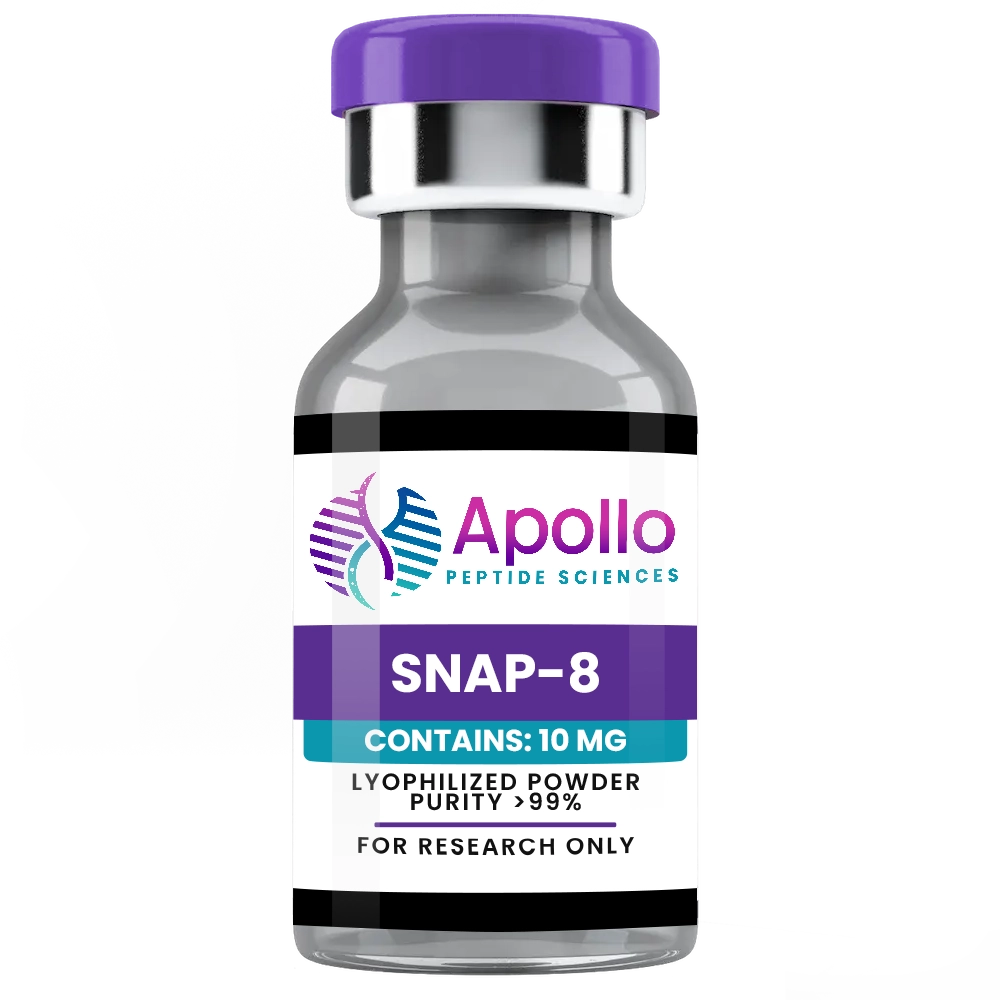
Buy GHK-CU Copper Peptide 50mg
$50
Buy Now — $50Buy at ApolloResearch-grade · COA verified · Apollo Peptide Sciences
Common Questions About GHK-CU Copper
What does GHK-CU copper peptide do?
GHK-CU activates over 4,000 genes involved in tissue repair, collagen synthesis, anti-inflammatory response, and antioxidant defense. It promotes skin collagen and elastin production, accelerates wound healing, modulates neurotrophic factors, and reverses some age-related gene expression changes in human cells. It is one of the most comprehensively studied anti-aging peptides, with applications in both wound healing and longevity protocols.
How is GHK-CU used — topical or injectable?
GHK-CU can be used both topically (dissolved in a carrier serum at 3–10% concentration applied to skin) and injected subcutaneously for systemic effects. Topical application is most commonly used for skin collagen rebuilding, wrinkle reduction, and wound healing. Subcutaneous injection provides systemic gene expression modulation across a broader biological range. Many anti-aging protocols combine both routes — topical daily for skin, subcutaneous 2–3 times per week for systemic benefits.
How long does GHK-CU take to show results?
Topical results for skin quality — improved firmness, wrinkle reduction, and tone — are typically visible at 4–8 weeks of consistent daily use. Systemic benefits such as improved wound healing and inflammatory modulation begin within 2–3 weeks. The gene expression changes that drive most long-term benefits accumulate over 10–12 weeks of continuous use. Pair with SNAP-8 topically for the complete anti-aging skin protocol.
Related Protocols
Anti-Aging Peptide Guide
How GHK-CU targets epigenetic drift and gene expression aging.
Longevity Stack
GHK-CU paired with Epithalon and NAD+ for full longevity coverage.
BPC-157 10mg
Combine for the complete wound healing and tissue repair protocol.
SNAP-8 Topical Peptide
Stack GHK-CU with SNAP-8 for the complete anti-aging skin protocol.
GHK-CU Copper Peptide 50mg
$50