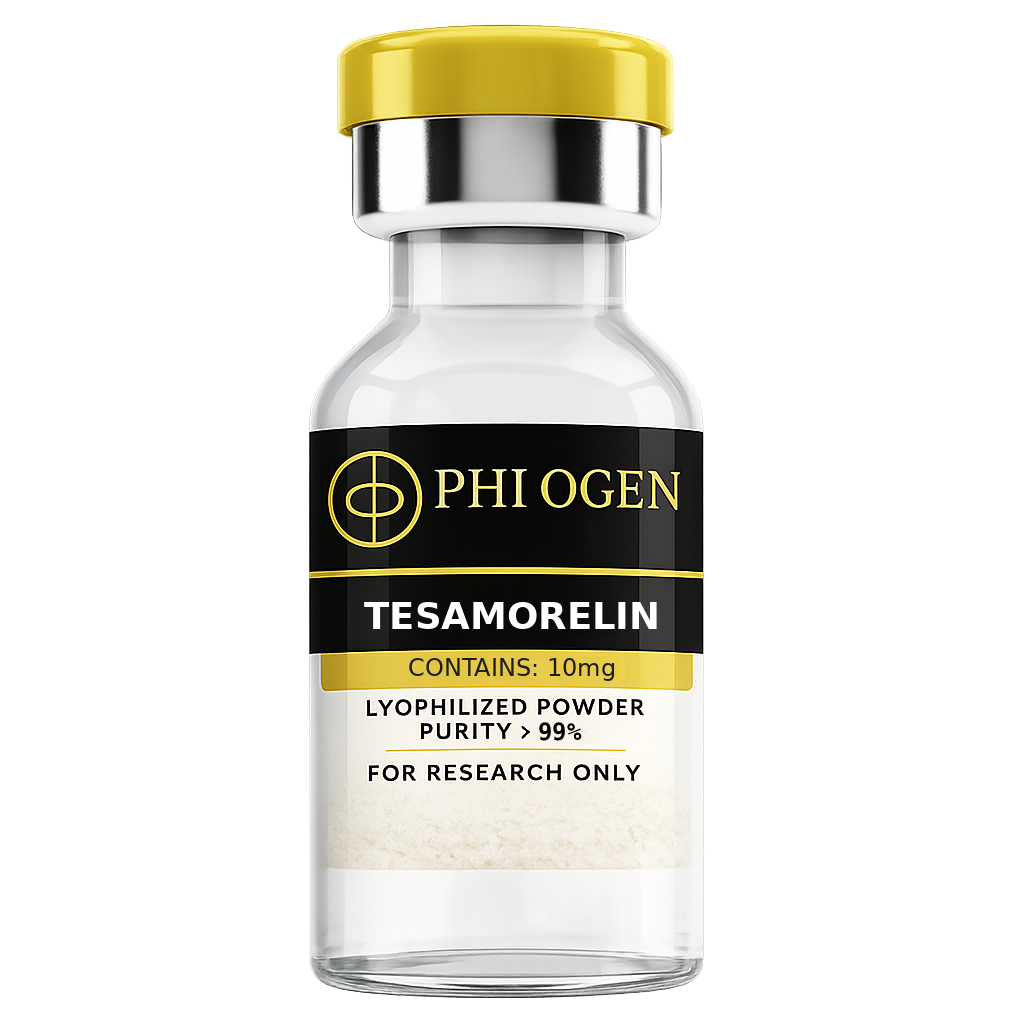
Buy Tesamorelin 10mg
FDA-approved GHRH analogue — clinically proven visceral fat reduction and GH elevation
Who This Is For
Users with significant visceral fat accumulation or metabolic syndrome who want a clinically validated GH approach to intra-abdominal fat reduction.
Overview & Benefits
Key Benefits
- FDA-approved for visceral fat reduction — 15–18% reduction in clinical trials
- Specifically targets metabolically dangerous intra-abdominal fat
- Elevates GH and IGF-1 for lean mass support alongside fat loss
- Clinically validated in 26-week studies — robust safety data
- Ideal for metabolic syndrome and stubborn visceral adiposity
Protocols & Dosing
Visceral Fat Protocol
Once daily before bedInject on empty stomach. Clinical trials used 2mg/day. Pair with Ipamorelin for amplified GH response. Run minimum 12 weeks for measurable visceral fat changes.
Tesamorelin: GHRH Receptor Agonism, Visceral Fat Mobilisation, and FDA-Approved Pharmacology
Phase III Clinical Evidence and FDA Approval Data for Tesamorelin
Key Studies
Falutz J, et al. "Metabolic effects of a growth hormone-releasing factor in patients with HIV." NEJM (2007)
Phase II data showing tesamorelin 2 mg/day reduced VAT by 15% at 12 weeks in HIV-lipodystrophy patients with significant improvements in triglycerides and trunk fat; established dose and endpoint for Phase III.
Falutz J, et al. "Effects of tesamorelin (TH9507), a growth hormone-releasing factor analogue, in HIV-infected patients with abdominal fat accumulation: A Phase 3 multicentre, randomised trial." Lancet Infectious Diseases (2010)
ENCORE Phase III: tesamorelin reduced visceral adipose tissue by 17.8% versus placebo (+2.1%) at 26 weeks (p<0.0001); triglycerides fell 50 mg/dL; IGF-1 normalised in treated patients.
Stanley T, et al. "A randomised, placebo-controlled trial of tesamorelin for visceral fat reduction in HIV-infected individuals with central fat accumulation." RADIANCE trial (2010)
RADIANCE Phase III: 15.2% VAT reduction at 26 weeks vs. 5.0% increase in placebo; benefit sustained at 52 weeks in continuous-treatment arm, with partial rebound in patients switched to placebo at week 26.
Grinspoon SK, et al. "Long-term cardiovascular risk reduction from tesamorelin in HIV-infected patients with abdominal fat accumulation." Journal of Clinical Endocrinology & Metabolism (2012)
Two-year follow-up data confirmed sustained VAT reduction (−18% from baseline), with significant reductions in carotid intima-media thickness velocity — a cardiovascular surrogate endpoint — in tesamorelin-treated HIV patients.
Dhindsa S, et al. "Tesamorelin reduces liver fat in HIV-infected patients with nonalcoholic fatty liver disease." Clinical Infectious Diseases (2018)
Tesamorelin significantly reduced hepatic fat fraction by MRI spectroscopy in HIV-positive individuals with NAFLD, extending its metabolic benefits beyond visceral adiposity to hepatic steatosis.
Fourman LT, et al. "Effects of tesamorelin on liver fat and metabolic parameters in HIV-infected patients." Journal of Acquired Immune Deficiency Syndromes (2018)
Tesamorelin reduced liver fat content by approximately 37% from baseline compared to 4% in placebo group, improving hepatic insulin sensitivity and hepatic triglyceride content in HIV-positive metabolic syndrome patients.
Safety Profile & Side Effects
Peripheral Oedema
lowOedema and fluid retention are the most common adverse effects, reported in approximately 6–7% of patients in Phase III trials. GH-mediated renal sodium retention causes extracellular fluid expansion manifesting as ankle swelling or generalised puffiness, particularly in the initial weeks. Usually resolves without intervention.
Arthralgia and Myalgia
moderateJoint pain, primarily in the wrists, knees, and ankles, was reported in 11–13% of tesamorelin-treated patients in pivotal trials. Attributed to fluid redistribution in periarticular spaces driven by GH-mediated sodium retention. Responds to dose reduction and typically improves over time.
Glucose Dysregulation and Insulin Resistance
moderateGH elevations cause transient insulin resistance via IRS-1 serine phosphorylation and reduced glucose transporter 4 (GLUT4) membrane translocation. In Phase III trials, HbA1c increased a mean of 0.09% in the tesamorelin group; risk of diabetes progression was higher in patients with pre-existing metabolic syndrome. Regular glucose monitoring is essential.
Injection Site Reactions
lowErythema, pain, pruritus, and induration at the injection site were reported in up to 9% of Phase III patients. Rotating injection sites and proper technique minimise severity.
IGF-1 Elevation Above Normal Range
moderateA subset of patients develop IGF-1 levels exceeding the upper limit of the age-adjusted normal range during tesamorelin therapy, particularly at higher doses or in smaller individuals. Sustained supraphysiological IGF-1 is associated with theoretical cancer promotion risk; IGF-1 monitoring and dose adjustment are recommended.
Buyer's Guide: Tesamorelin 10mg
Tesamorelin vs. Other GHRH Analogues and Visceral Fat Interventions
Buy Tesamorelin 10mg
$119.99
Buy Now — $119.99Buy at PhiogenResearch-grade · COA verified · Phiogen

Tesamorelin 10mg
$119.99