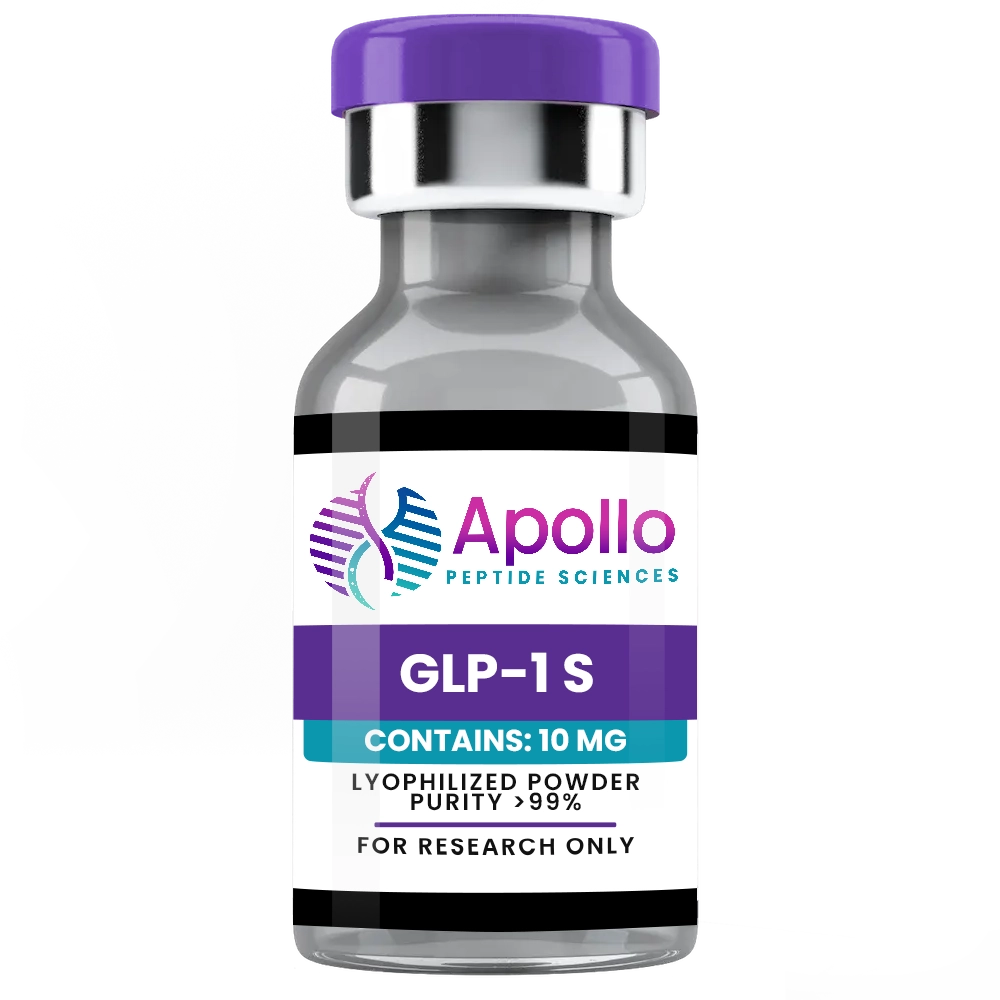
GLP-1 S 10mg
fat loss
Quality Rating

Buy GLP-1 S 10mg

Double-vial supply of semaglutide — ideal for extended fat loss protocols

20-week supply at 0.5mgPreserves lean massBest value semaglutide

Who This Is For

Users who have completed their initial titration, confirmed semaglutide works for them, and are ready to run a sustained fat loss or body recomposition protocol.

Semaglutide 10mg — Extended Protocol

Double the supply — designed for users who have completed titration and want sustained 20-week coverage at maintenance doses.

Supply at 0.5mg/wk

20 weeks

maintenance protocol

Supply at 1.0mg/wk

10 weeks

therapeutic protocol

Lean mass impact

Preserved

vs. diet-only loss

NAFLD reduction

Secondary benefit

liver fat reduction

Albumin binding

Engineered

C18 fatty acid conjugate

Best paired with

CJC-1295/Ipa

for body recomp

Overview & Benefits

By the time you're ready for a 10mg vial, something important has shifted: you've proven the protocol works for you. You've found your dose, you know how your body responds, and the appetite suppression has become a reliable tool rather than an experiment. This vial is for the momentum phase — maintaining and building on progress that's already underway, without the friction of frequent restocking. At 0.5mg/week maintenance, 10mg covers 20 weeks of continuous protocol. At 1.0mg/week, you're looking at 10 weeks. Most users in this phase aren't dramatically changing their dose week to week; they've landed somewhere in the 0.5–1.5mg range that provides meaningful appetite control and are now focused on consistency. The psychological difference of having an extended supply on hand matters — it removes the "running low" anxiety that can cause people to skip injections or disrupt their weekly schedule. This is also the stage where body recomposition becomes a real possibility. Users who pair semaglutide with CJC-1295/Ipamorelin during this phase find that the combined effect — GLP-1's caloric deficit facilitation plus GH peptides' lean mass preservation and growth — produces body composition improvements that diet alone can't replicate. Semaglutide appears to preferentially draw from fat stores during its fat loss phase, and this preference becomes more pronounced when GH signaling is providing an anabolic counterforce. The result is simultaneous fat loss and muscle maintenance, or in some cases, genuine recomposition. The 10mg vial also opens access to what semaglutide does beyond the scale number — improvements in fasting glucose, insulin sensitivity, triglycerides, and even liver fat accumulation that often go unnoticed because users focus only on weight. These metabolic improvements compound over weeks and represent real health gains independent of aesthetic results. At the 10mg level, you're building the sustained protocol duration where those secondary benefits become measurable.

Key Benefits

  • 20-week supply at 0.5mg/week — the ideal maintenance-phase purchase
  • Pairs with GH peptides for body recomposition: fat loss with lean mass preservation
  • Removes restocking friction — consistent supply enables consistent weekly dosing
  • Metabolic improvements in insulin sensitivity, triglycerides, and liver fat compound over extended use
  • Preferentially draws from fat stores while preserving lean muscle during deficit
  • Covers the full momentum phase: from early progress through established maintenance
  • Best cost-per-mg across the semaglutide range for sustained protocols

Protocols & Dosing

Maintenance Protocol

Once weekly
0.5–1.0mg subcutaneous after completing titration

For users who have already titrated. Maintain at the lowest dose that provides adequate appetite suppression. Take on the same day each week for consistent coverage.

How Semaglutide Works: GLP-1 Receptor Agonism and Energy Homeostasis

Semaglutide is a synthetic analogue of human glucagon-like peptide-1 (GLP-1), an incretin hormone secreted predominantly by L-cells of the distal small intestine in response to nutrient ingestion. Native GLP-1 has a plasma half-life of roughly 2 minutes owing to rapid degradation by dipeptidyl peptidase-4 (DPP-4) and neutral endopeptidase. Semaglutide circumvents this limitation through two critical structural modifications: a C-18 fatty diacid chain attached via a linker to lysine at position 26, enabling reversible, high-affinity binding to albumin, and two amino-acid substitutions (Aib at position 8 and arginine at position 34) that confer near-complete DPP-4 resistance. The result is a half-life exceeding 165 hours, enabling once-weekly subcutaneous dosing with remarkably stable plasma concentrations. At the cellular level, semaglutide engages the GLP-1 receptor (GLP-1R), a class B G-protein-coupled receptor expressed in pancreatic beta-cells, hypothalamic nuclei, vagal afferents, gastric parietal cells, cardiac myocytes, and adipose tissue. Receptor occupation triggers Gs-mediated adenylyl cyclase activation, elevating intracellular cyclic AMP (cAMP) and activating protein kinase A (PKA). In pancreatic beta-cells this cascade potentiates glucose-stimulated insulin secretion while suppressing glucagon release from alpha-cells, collectively lowering postprandial glucose excursions without imposing hypoglycemia risk in euglycemic conditions. In hypothalamic arcuate and paraventricular nuclei, GLP-1R stimulation suppresses neuropeptide Y (NPY) and agouti-related peptide (AgRP)—the principal orexigenic signals—while upregulating pro-opiomelanocortin (POMC) and cocaine-and-amphetamine-regulated transcript (CART), neuropeptides that promote satiety and reduce energy intake. The peripheral contribution to fat loss is equally important. Semaglutide slows gastric emptying by inhibiting antral contractility, reducing the rate of nutrient delivery to the small intestine and blunting postprandial glucose and lipid spikes. This gastroparesis-like effect prolongs gastric distension, activating vagal mechanoreceptors that relay satiety signals to the nucleus tractus solitarius (NTS). Additionally, GLP-1R activation in white adipose tissue increases lipolysis via PKA-mediated phosphorylation of hormone-sensitive lipase (HSL) and perilipin-1, mobilising stored triglycerides as free fatty acids for oxidation. Chronic semaglutide exposure also suppresses de novo lipogenesis in the liver by reducing SREBP-1c expression and diminishing hepatic steatosis, a common comorbidity of obesity. Long-term energy-balance effects emerge from semaglutide's modulation of the mesolimbic reward circuitry. GLP-1R expression in the ventral tegmental area (VTA) and nucleus accumbens (NAc) dampens dopaminergic responses to high-calorie food cues, reducing hedonic eating without the anhedonia associated with opioid antagonists. This central action explains the disproportionate reduction in highly palatable food consumption observed in clinical subjects—a phenomenon that extends weight loss beyond what caloric restriction alone would predict. Together, these interconnected mechanisms create a comprehensive metabolic environment favouring sustained fat mass reduction while largely preserving lean body mass.

Clinical Evidence: Semaglutide Efficacy in Obesity and Metabolic Disease

The STEP (Semaglutide Treatment Effect in People with Obesity) program, comprising five large randomised controlled trials, established semaglutide 2.4 mg weekly as a landmark pharmacotherapy for obesity. STEP 1 enrolled 1,961 adults with a BMI of 30 or above (or 27 with at least one comorbidity) and demonstrated a mean body-weight reduction of 14.9% from baseline over 68 weeks, versus 2.4% in the placebo group. Nearly 70% of semaglutide-treated participants achieved at least 10% weight loss, and approximately one-third lost 20% or more—outcomes that historically required bariatric surgery. Subcutaneous adipose tissue accounted for the majority of lost mass, with visceral fat declining disproportionately, a finding that carries outsized cardiovascular risk benefit. STEP 4 tested a maintenance design: subjects who had received semaglutide for 20 weeks were randomised to continue the drug or switch to placebo. Those continuing semaglutide lost an additional 7.9% over the subsequent 48 weeks, while those switched to placebo regained 6.9%—confirming that the therapy must be maintained to preserve weight loss and highlighting the chronic nature of obesity as a disease. STEP 5 extended the observation window to 104 weeks, finding that cumulative weight loss stabilised around 15.2%, with meaningful improvements in waist circumference, blood pressure, HbA1c, and triglyceride levels persisting throughout. The SUSTAIN and PIONEER trial families in type-2 diabetes similarly demonstrated 6–9% weight reductions alongside potent glycaemic control. Mechanistic imaging studies using DXA and MRI in semaglutide-treated subjects confirm that approximately 85% of weight lost is adipose tissue, with lean mass relatively preserved—a favourable body-composition shift compared to very-low-calorie diets. Biomarker analyses show concurrent reductions in high-sensitivity CRP, interleukin-6, and leptin, alongside increases in adiponectin, suggesting genuine reversal of adipose-tissue inflammation rather than simple mass reduction.

Key Studies

1

Wilding JPH et al. STEP 1 Trial. N Engl J Med. 2021;384(11):989–1002.

Once-weekly semaglutide 2.4 mg produced mean 14.9% body-weight loss over 68 weeks vs 2.4% with placebo.

2

Rubino DM et al. STEP 4 Trial. JAMA. 2021;325(14):1414–1425.

Continuation of semaglutide post-induction produced additional loss; withdrawal led to substantial regain, emphasising the need for sustained therapy.

3

Garvey WT et al. STEP 5 Trial. Nat Med. 2022;28(10):2083–2091.

Two-year treatment maintained 15.2% weight reduction with durable cardiometabolic improvements.

4

Lincoff AM et al. SELECT Trial. N Engl J Med. 2023;389(24):2221–2232.

Semaglutide 2.4 mg reduced major adverse cardiovascular events by 20% in overweight adults with established cardiovascular disease.

5

Knop FK et al. OASIS 1 Trial. Lancet. 2023;402(10403):705–719.

Oral semaglutide 50 mg achieved 15.1% weight loss over 68 weeks, confirming robust efficacy across delivery routes.

Safety Profile & Side Effects

Nausea

moderate

The most commonly reported adverse event, occurring in up to 44% of users during dose escalation. Arises from slowed gastric emptying and central GLP-1R activation in the area postrema. Typically transient and manageable.

Vomiting

moderate

Affects approximately 24% of users, predominantly during the first 8–12 weeks. Usually episodic; hydration and small frequent meals mitigate severity.

Constipation

low

Reported in roughly 24% of participants. Dietary fibre, adequate hydration, and physical activity are primary countermeasures.

Appetite Suppression (excessive)

moderate

At maintenance doses, some users experience appetite suppression beyond intended levels, risking inadequate caloric intake. Structured meal planning helps maintain nutritional adequacy.

Gallbladder Disease

moderate

Rapid weight loss modestly elevates cholelithiasis risk. Monitoring is warranted in predisposed individuals.

Pancreatitis (rare)

high

Class-level precautionary label. Absolute incidence below 0.5% in trials; persistent upper-abdominal pain warrants evaluation.

Buyers Guide: Semaglutide 10 mg — The Mid-Protocol Continuation Vial

The 10 mg vial is designed for research subjects who have already completed the introductory dose-escalation phase and have established tolerability at doses in the 0.5–1.0 mg per week range. At a standard maintenance dose of 1.0–1.7 mg weekly, a 10 mg vial provides approximately 6–10 weeks of uninterrupted coverage—bridging the mid-protocol plateau phase where subjects are consolidating weight loss rather than actively escalating. This makes the 10 mg vial the pragmatic choice for anyone who has graduated past the starter 5 mg vial and is not yet ready to commit to bulk quantities. From a protocol-design standpoint, this vial size suits the "optimisation window" of a semaglutide course—weeks 10 through 24—when dose fine-tuning based on individual response is most active. Some subjects stabilise at 1.0 mg weekly and achieve their target outcomes without needing further escalation; for them, two successive 10 mg vials represent a full extended research cycle without surplus. Others may be titrating toward 1.7 mg or 2.4 mg and will use the 10 mg vial as a transitional supply before moving to a 15 mg bulk option. Reconstitution practices become increasingly important at this stage. Bacteriostatic water (0.9% benzyl alcohol) is preferred over sterile water for reconstitution as it provides a 28-day post-reconstitution stability window at refrigerated temperature. Each vial should be gently swirled—never shaken—to avoid mechanical degradation of the peptide. Purity certificates from qualified third-party analytical laboratories should accompany any supply, confirming HPLC purity above 98% and correct molecular identity by mass spectrometry. Users advancing their protocol past the introductory phase should also be monitoring body composition metrics—not just scale weight—to ensure the majority of mass loss is adipose rather than lean tissue.

Semaglutide vs. Alternatives: Evidence Depth vs. Raw Efficacy
Semaglutide's principal competitive advantage over newer agents is its depth of clinical evidence. With over 15 published phase-3 trials, long-term cardiovascular outcome data from the SELECT trial, and real-world use in millions of patients, its benefit-risk profile is understood with a precision that tirzepatide and retatrutide cannot yet match. For research purposes, this translates to better-characterised dose-response relationships, predictable tolerability windows, and the largest body of comparative body-composition data available for any injectable weight-loss peptide. When positioned against tirzepatide, semaglutide delivers approximately 5–8 percentage points less body-weight reduction on an absolute basis. However, within the typical research dose range (1.0–2.4 mg weekly), semaglutide achieves outcomes meaningfully superior to lifestyle intervention alone, and its superior cardiovascular outcome evidence makes it the preferred agent in metabolic risk reduction contexts. The 10 mg vial format, allowing sustained mid-protocol administration without frequent reordering, makes it an operationally efficient choice for structured research cycles requiring protocol continuity.

Stack With These Peptides

CJC-1295 / Ipamorelin

CJC-1295 / Ipamorelin

performance

View →
IGF-1 LR3

IGF-1 LR3

performance

View →
GLP-1 S 10mg

Buy GLP-1 S 10mg

$99.99

Buy Now — $99.99Buy at Apollo

Research-grade · COA verified · Apollo Peptide Sciences
Categoryfat loss
Typeinjectable
Quality Rating★★★★★
VendorApollo

Common Questions About GLP-1 S

Who needs a 10mg semaglutide vial?

The 10mg vial is for users who have completed the titration phase and are running semaglutide at an established therapeutic maintenance dose — typically 1–2mg/week. At 1mg/week this vial provides 10 weeks of supply; at 2mg/week, 5 weeks. It is also the right choice for users who have found their optimal dose and want cost-efficient ongoing supply without committing to the maximum 15mg vial.

What is the maximum effective semaglutide dose?

Pharmaceutical trials (Wegovy) used a maximum of 2.4mg/week reached via a 16-week step-wise titration. Self-directed protocols typically target 1–2mg/week as the practical therapeutic range balancing efficacy with tolerability. Higher doses produce marginally greater weight loss but significantly higher GI side effect burden. The dose-response curve flattens above 2mg/week for most users.

Semaglutide vs tirzepatide — which produces better results?

Head-to-head trial data consistently shows tirzepatide outperforms semaglutide. SURMOUNT-1 produced 22.5% mean body weight loss for tirzepatide vs semaglutide's 14.9% in STEP 1 — approximately 7–8 percentage points more. Tirzepatide adds GIP receptor activation to GLP-1 signaling, producing additive appetite suppression through a second pathway. For maximum fat loss, tirzepatide is the stronger compound. Semaglutide remains the better starting point for first-time GLP-1 users due to its simpler titration and extensive human use data.

GLP-1 S 10mg

$99.99

Buy Now