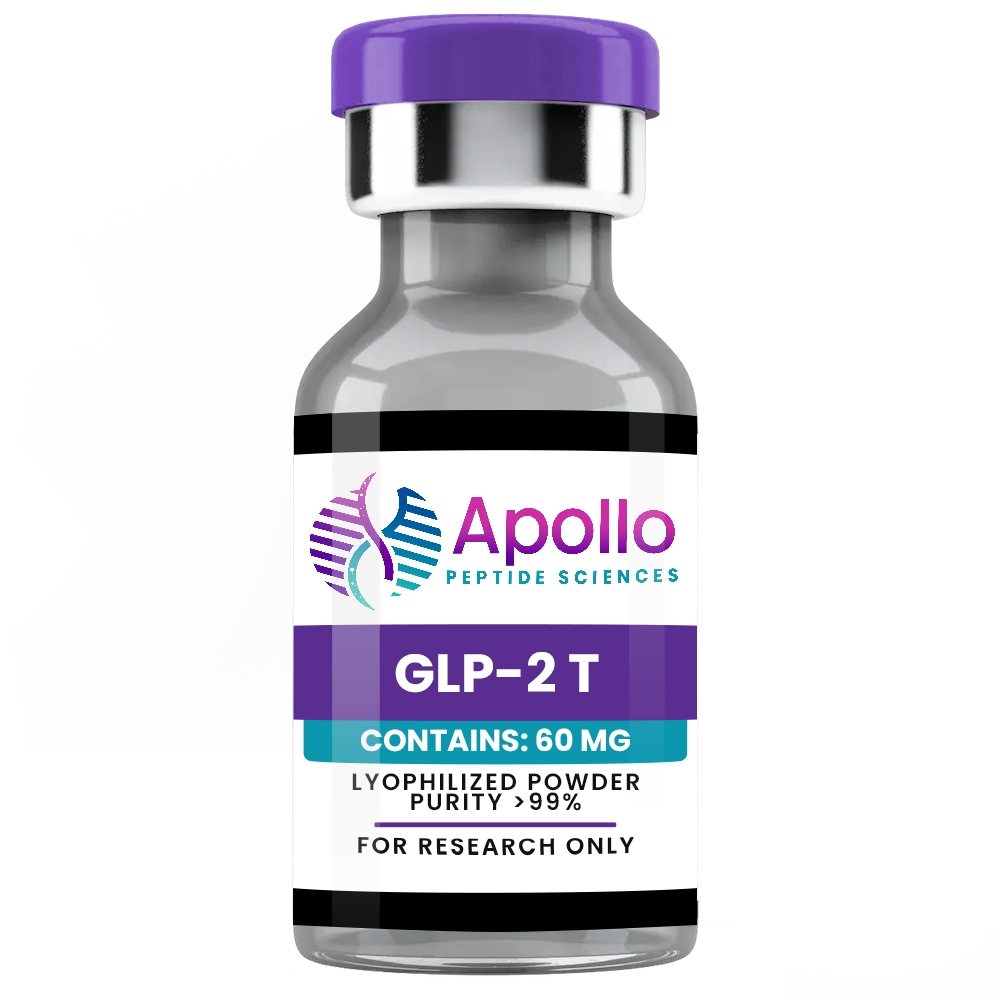
GLP-2 T 60mg
fat loss
Quality Rating

Buy GLP-2 T 60mg

Maximum supply tirzepatide — for long-term dual-agonist protocols and best-in-class value

12-week supply at 5mg/weekLowest cost per mgLong-term metabolic reset

Who This Is For

Committed users who've found their target dose and want maximum value with minimal restocking friction over a 3-month run.

Tirzepatide 60mg — Bulk Protocol Supply

Largest tirzepatide vial — for long-term protocols at maximum 15mg/week dose, or extended maintenance at moderate doses with best cost efficiency.

Supply at 15mg/wk

4 weeks

max clinical dose

Supply at 7.5mg/wk

8 weeks

mid-range maintenance

Max clinical dose

15mg/week

SURMOUNT trials

Cost per mg

Lowest

in tirzepatide range

Fat loss mechanism

GLP-1 + GIP + adipose

triple tissue pathway

Lean mass

Preserved

SURMOUNT body comp data

Overview & Benefits

Twelve weeks at 5mg/week. That's what the 60mg tirzepatide vial delivers — a single purchase that covers a complete 3-month protocol without restocking, without reconstitution anxiety, without gaps. For users who have made the decision to commit to tirzepatide properly, this is the most practical way to do it. One vial, one protocol, one uninterrupted run. The 12-week protocol is where tirzepatide's deepest effects emerge. The scale changes are well underway by this point, but what's happening underneath — the metabolic reset that sustained dual-agonist signaling produces — is only fully realized with time. Visceral adipose tissue, the metabolically active fat surrounding the organs that drives inflammation and insulin resistance, requires sustained suppression of fat oxidation-promoting signals to meaningfully reduce. Leptin sensitivity, which dysregulates as body fat increases and drives the "hungry even when fed" pattern many people experience, begins normalizing over 10–12 weeks of consistent GIP and GLP-1 receptor activation. These aren't changes you see on a scale, but they're the changes that determine whether results last. The SURMOUNT-4 extension data makes a clear case for why long-term protocols matter: participants who discontinued tirzepatide regained roughly two-thirds of their lost weight within 52 weeks. Those who continued maintained their results. For anyone who has struggled with weight regain after previous fat loss attempts, this data is relevant — it argues for protocols long enough to allow the metabolic adaptations that make maintenance sustainable. At the 60mg level, you're also getting the best cost structure in the tirzepatide range. If you're running 5mg/week, this is four months of coverage per purchase. The math makes this the obvious choice for anyone who is decided on tirzepatide and wants to run it properly.

Key Benefits

  • Full 12-week protocol from a single purchase at 5mg/week — maximum convenience
  • Lowest cost-per-mg in the entire tirzepatide range
  • Visceral fat and leptin sensitivity normalization emerge only at the 10–12 week mark
  • SURMOUNT-4 data: users who continued tirzepatide maintained results; those who stopped regained
  • Covers the sustained duration needed for genuine metabolic reset — not just weight loss
  • Eliminates restocking friction across a full 3-month committed protocol
  • Single vial, single reconstitution timeline, maximum protocol simplicity

Protocols & Dosing

Long-Term Protocol

Once weekly
5–15mg based on individual response and tolerance

Store unmixed vials in freezer (–20°C) for up to 12 months. Once reconstituted, refrigerate at 2–8°C and use within 28 days. Use 29–31g insulin syringes.

How Tirzepatide Works: Dual GIP and GLP-1 Receptor Co-Agonism

Tirzepatide is a first-in-class dual glucose-dependent insulinotropic polypeptide (GIP) and GLP-1 receptor co-agonist. It is a 39-amino-acid synthetic peptide engineered on a GIP backbone with GLP-1 receptor-binding motifs inserted at strategic positions. A C20 fatty diacid moiety attached via a mini-PEG spacer confers albumin binding analogous to that of semaglutide, extending the half-life to approximately 5 days and enabling once-weekly subcutaneous dosing. Both receptors—GIP-R and GLP-1R—are class B GPCRs that signal primarily through Gs/adenylyl cyclase/cAMP pathways, but their tissue expression patterns are distinct, and simultaneous activation creates synergistic metabolic effects neither receptor alone can reproduce. GIP-R is expressed at high density in adipose tissue—both white and brown—where its activation enhances insulin-stimulated glucose uptake and, crucially under caloric restriction, dramatically accelerates lipolysis and free fatty acid mobilisation. This context-dependency is central to tirzepatide's superior efficacy: in an energy-deficit state, GIP-R agonism in adipose tissue compounds the lipolytic signal rather than opposing it, driving greater absolute fat mobilisation than GLP-1 agonism alone. Simultaneously, GIP-R activation in the central nervous system amplifies satiety signalling from GLP-1R, creating dual-pathway appetite suppression. GLP-1R agonism within tirzepatide mirrors semaglutide's mechanisms: suppression of NPY/AgRP, upregulation of POMC/CART, glucose-dependent insulin secretion enhancement, glucagon suppression, and gastric emptying delay. Pancreatic beta-cell function is additionally enhanced by GIP-R stimulation of beta-cell proliferation and anti-apoptotic PI3K/Akt signalling. Together, the complementary receptor profiles create a metabolic environment where central appetite control, peripheral fat mobilisation, and pancreatic function all improve simultaneously. Brown adipose tissue thermogenesis is enhanced through GIP-R-mediated upregulation of UCP1 and increased sympathetic innervation of BAT depots, contributing to elevated resting energy expenditure independent of caloric intake. Mechanistic imaging studies in tirzepatide-treated subjects document proportionally greater reductions in visceral adipose tissue compared to subcutaneous depots—a distribution pattern that carries the highest cardiovascular and metabolic risk-reduction benefit. These combined central and peripheral actions produce weight-loss outcomes that, at the 15 mg maximal dose, approach those historically associated only with surgical intervention.

Clinical Evidence: Tirzepatide in the SURMOUNT and SURPASS Trial Programs

The SURMOUNT program produced the most compelling weight-loss data for any pharmacological agent at the time of publication. SURMOUNT-1 enrolled 2,539 adults with obesity and demonstrated 20.9% mean weight loss at 15 mg over 72 weeks—with 57% of participants losing at least 20% of body weight. These outcomes exceeded semaglutide's best results by approximately 6 percentage points and challenged the assumption that pharmacotherapy could not approach bariatric surgical outcomes. Visceral adipose tissue declined by up to 45% from baseline, producing measurable improvements in hepatic steatosis and arterial compliance. SURMOUNT-3 studied tirzepatide as an adjunct to intensive behavioural intervention, achieving an extraordinary 24.3% mean weight loss at 72 weeks—the highest ever recorded in a phase-3 weight-management trial. This result confirmed that the dual-agonist mechanism does not become redundant when intensive lifestyle intervention is added; rather, the two approaches are genuinely additive. Long-term SURMOUNT-4 data confirmed that benefits persist with continuous treatment and that withdrawal causes substantial weight regain, establishing tirzepatide as a maintenance therapy rather than a short-course intervention. SURPASS cardiovascular outcome trials are ongoing, but the SURPASS-CVOT program is expected to report within 2025–2026. Interim cardiovascular risk-factor data from completed SURPASS trials show consistent improvements in systolic blood pressure (−6 to −8 mmHg), triglycerides (−22 to −32%), LDL-cholesterol, and inflammatory markers—supporting an anticipated cardiovascular outcome benefit comparable to or exceeding semaglutide's 20% MACE reduction in the SELECT trial.

Key Studies

1

Jastreboff AM et al. SURMOUNT-1 Trial. N Engl J Med. 2022;387(3):205–216.

Tirzepatide 15 mg produced 20.9% mean weight loss; 57% lost ≥20% body weight—approaching surgical outcomes pharmacologically.

2

Wadden TA et al. SURMOUNT-3 Trial. Nat Med. 2023;29(9):2170–2178.

Tirzepatide combined with intensive lifestyle intervention achieved 24.3% weight loss—the highest recorded in any phase-3 pharmacological trial.

3

Aronne LJ et al. SURMOUNT-4 Trial. JAMA. 2024;331(1):38–48.

Continued tirzepatide after induction produced further 5.5% loss; withdrawal caused 14% regain over 52 weeks.

4

Garvey WT et al. SURMOUNT-2 Trial. Lancet. 2023;402(10402):613–626.

Even in type-2 diabetes patients (with blunted weight-loss response), tirzepatide 15 mg achieved 13.4% weight reduction.

5

Frías JP et al. SURPASS-2 Trial. N Engl J Med. 2021;385(6):503–515.

Tirzepatide significantly outperformed semaglutide 1 mg on both weight loss and HbA1c reduction in a direct head-to-head trial.

6

Dahl D et al. SURPASS-3 Trial. Lancet Diabetes Endocrinol. 2021;9(11):765–778.

Tirzepatide superior to insulin degludec on HbA1c reduction and produced 12.9 kg weight loss versus 2.3 kg weight gain with insulin.

Safety Profile & Side Effects

Nausea

moderate

Present in up to 31% of users at maximal doses. Follows a dose-escalation pattern; minimised by slow titration. Generally resolves within 4–8 weeks of reaching a stable dose.

Diarrhoea

moderate

Reported in approximately 23% of subjects. GLP-1R-mediated intestinal motility acceleration; self-limiting and manageable with dietary adjustment.

Vomiting

moderate

Affects 12–18% during escalation. The 60 mg bulk format means users have likely already established tolerability; vomiting at stable doses should prompt dose re-evaluation.

Lean Mass Loss

moderate

Approximately 16% of total weight lost can be lean mass without resistance training. At the high cumulative weight-loss levels achievable with tirzepatide, active lean mass preservation strategies are critical.

Hypoglycaemia (with insulin/sulphonylureas)

high

Tirzepatide substantially amplifies insulin action; co-administration with insulin or insulin secretagogues requires proactive dose reduction of those agents.

Gallstone Formation

moderate

Rapid significant weight loss increases cholelithiasis risk. At the high weight-loss levels achievable with tirzepatide, monitoring for biliary symptoms is warranted.

Buyers Guide: Tirzepatide 60 mg — Bulk Supply for Extended High-Efficacy Protocols

The 60 mg tirzepatide vial is designed for experienced research subjects who have established tolerability at doses of 10–15 mg weekly and are committed to an extended protocol cycle of 16 weeks or longer. At 10 mg weekly, 60 mg provides six weeks of dosing; at the maximal 15 mg weekly maintenance dose, it covers four weeks. For subjects running 24-week extended protocols—representing approximately the minimum duration needed to observe tirzepatide's full potential weight-loss outcome—two or three 60 mg vials represent the full cycle supply. This bulk format maximises cost efficiency for the highest-efficacy phase of tirzepatide research. From a protocol design perspective, subjects using the 60 mg vial are typically in the weight-loss maintenance and optimisation phase: dose escalation is complete, GI tolerability is established, and the primary focus shifts to sustaining caloric deficit, preserving lean mass, and tracking body-composition metrics. At this stage, the consistency of supply provided by bulk vials becomes a protocol-integrity factor—gaps in administration due to supply logistics can meaningfully disrupt the steady-state plasma concentrations that characterise tirzepatide's weekly dosing regimen. Quality documentation for a 60 mg vial purchase deserves the highest level of scrutiny. At this quantity, any peptide-content discrepancy or purity compromise represents a significant research investment risk. Require batch-specific HPLC purity (above 98%), mass spectrometry confirming intact molecular weight (4,813.5 Da for tirzepatide), endotoxin testing (below 1 EU/mg), and sterility documentation. Cold-chain shipping with temperature excursion logs provides assurance that lyophilised integrity has been maintained. Reconstituting a 60 mg vial into a concentrated stock solution (e.g., 3–6 mL bacteriostatic water) and aliquoting into individual dose syringes stored at 4 °C is the recommended preparation approach for maintaining dose accuracy across a multi-week protocol.

Tirzepatide vs. Alternatives: The High-Volume Efficacy Case
At the bulk supply level represented by the 60 mg vial, subjects are committed to a tirzepatide protocol for its maximal efficacy potential. Against semaglutide's best outcomes (~15% weight loss), tirzepatide's ~21% average in SURMOUNT-1 represents an approximately 40% greater relative fat-mass reduction—a clinically and experimentally meaningful difference that justifies the step-up for subjects who have plateaued on or completed a semaglutide protocol. The comparison to retatrutide at this stage is nuanced. Phase-2 retatrutide data (Jastreboff et al., NEJM 2023) showed 24% mean weight loss over 48 weeks at the highest dose, suggesting a potential ceiling advantage over tirzepatide. However, phase-3 retatrutide data remain pending as of early 2026, and the safety profile at scale is not yet characterised with the same confidence as tirzepatide. For researchers who require both maximum efficacy and maximum interpretive confidence from established phase-3 data, the 60 mg tirzepatide vial represents the current state-of-the-art in research-validated weight-loss pharmacology.

Stack With These Peptides

CJC-1295 / Ipamorelin

CJC-1295 / Ipamorelin

performance

View →
IGF-1 LR3

IGF-1 LR3

performance

View →
GLP-2 T 60mg

Buy GLP-2 T 60mg

$489.99

Buy Now — $489.99Buy at Apollo

Research-grade · COA verified · Apollo Peptide Sciences
Categoryfat loss
Typeinjectable
Quality Rating★★★★★
VendorApollo

Common Questions About GLP-2 T

Why buy the tirzepatide 60mg vial?

The 60mg vial is the most cost-efficient option for long-term tirzepatide protocols. SURMOUNT-4 trial data showed weight loss continued improving through 88 weeks of use, confirming that sustained protocols outperform short runs. At 10mg/week the 60mg vial provides 6 weeks; at 5mg/week, 12 weeks. For users committed to a 16–20+ week protocol, the 60mg vial reduces per-milligram cost and vial-handling frequency.

Is the tirzepatide 60mg vial a single dose?

No — 60mg is the total vial content, not a single injection. Tirzepatide is dosed weekly at 2.5–15mg per injection. The 60mg vial contains enough for multiple weekly injections across several weeks depending on your dose. Never attempt to inject the entire vial contents at once.

What does a full 20-week tirzepatide protocol look like?

Weeks 1–4: 2.5mg/week (titration). Weeks 5–8: 5mg/week. Weeks 9–12: 7.5mg/week. Weeks 13–20: maintain at 7.5–15mg/week at your tolerance ceiling. Total supply needed for 20 weeks at 7.5mg maintenance: approximately 130mg. Pair with CJC-1295/Ipamorelin throughout to preserve lean mass during significant fat loss.

GLP-2 T 60mg

$489.99

Buy Now