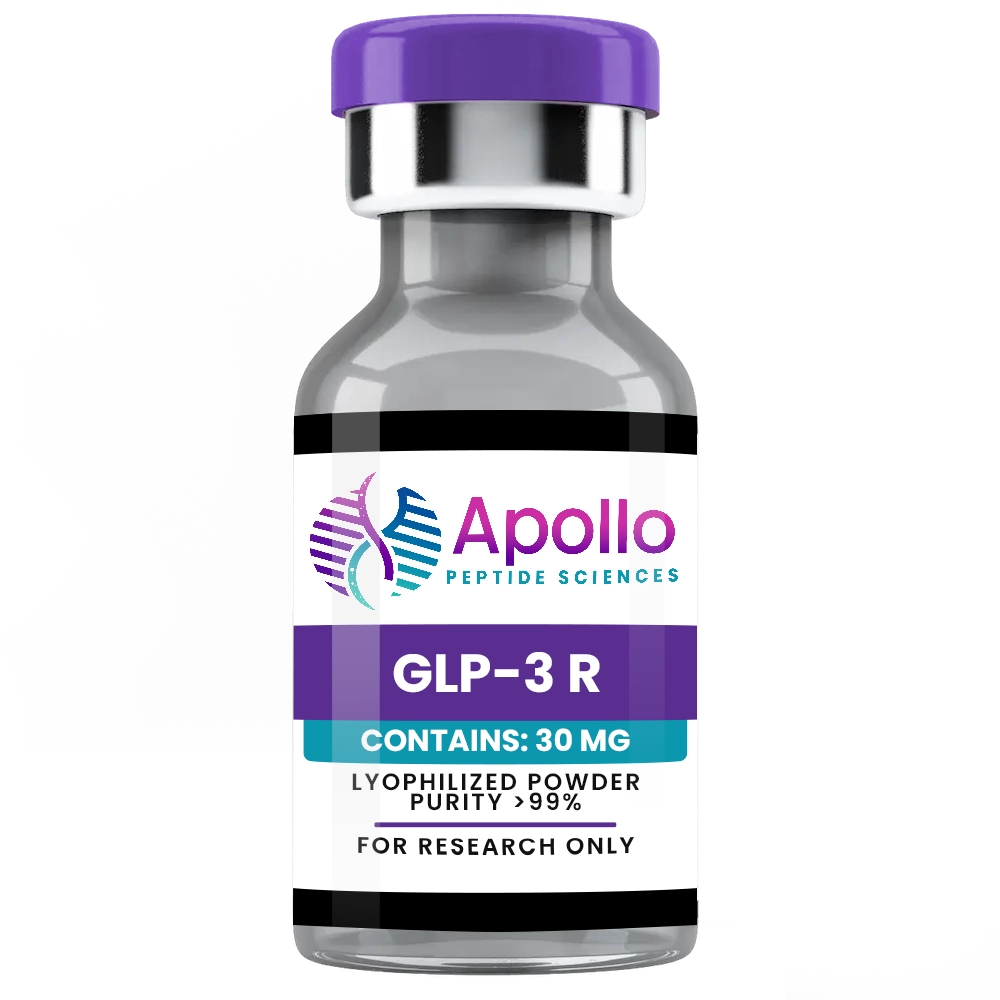
GLP-3 R 30mg
fat loss
Quality Rating

Buy GLP-3 R 30mg

Maximum retatrutide supply — best value for committed triple-agonist long-term protocols

7.5-week supplyLowest cost per mgFull NAFLD reversal protocol

Who This Is For

Users targeting liver health and NAFLD reversal alongside fat loss, or those committed to a long-term triple-agonist protocol who want the supply and cost efficiency for a sustained 8–12 week run.

Retatrutide 30mg — High-Dose Protocol

Extended supply for experienced users running retatrutide at 6–12mg/week — the dose range producing the most significant body composition changes in clinical data.

Supply at 8mg/wk

3.75 weeks

high-dose protocol

Supply at 4mg/wk

7.5 weeks

mid-dose protocol

vs. Semaglutide

+10% more BWL

head-to-head estimates

Metabolic rate

+5–8% BMR

glucagon receptor data

GI risk at high dose

Moderate-high

titrate meticulously

Best stack

CJC-1295/Ipa

lean mass preservation

Overview & Benefits

The 30mg retatrutide vial is built around a specific outcome: liver transformation. The Phase 2 TRIUMPH trial data showed 50–60% reductions in liver fat assessed by MRI-PDFF in participants on sustained retatrutide protocols — a result that gets little attention in fat loss conversations but represents one of the most clinically significant outcomes in metabolic pharmacology. Non-alcoholic fatty liver disease (NAFLD) and its inflammatory progression NASH affect a large proportion of people with metabolic obesity and carry serious long-term cardiovascular and hepatic consequences. Retatrutide addresses this directly through its glucagon component, which drives hepatic fat oxidation alongside systemic thermogenesis. The catch is timing. Liver fat reduction doesn't show meaningful change until 12+ weeks of sustained triple-agonist signaling. The 30mg vial at 4mg/week covers 7.5 weeks — bought twice, or used alongside the 15mg vial, it enables the 12+ week protocol that liver transformation requires. At 8mg/week, the 30mg vial provides just under four weeks, positioning it as a natural pairing with the 15mg vial for users wanting to run the higher dose for a full two-month stretch. Beyond liver fat, the extended protocol changes reflected in TRIUMPH data include normalization of ALT and AST liver enzymes, reductions in CRP and fibrinogen (cardiovascular inflammation markers), and triglyceride normalization. These are the changes that matter to anyone tracking metabolic health comprehensively — not just the weight reading, but the underlying biology that determines long-term risk. The practical reconstitution math is also worth noting: at 4mg/week, a 30mg vial reconstituted in 3ml bacteriostatic water lasts nearly two months before you need to reconstitute again. Fewer sterile preparation steps means less contamination risk and a simpler protocol for users who are running this compound long-term.

Key Benefits

  • 50–60% liver fat reduction documented in TRIUMPH trial data — the liver transformation protocol
  • 7.5 weeks at 4mg/week — enables the 12+ week duration needed for hepatic fat reduction
  • ALT, AST liver enzyme normalization emerges only with extended sustained dosing
  • Lowest cost-per-mg in the retatrutide range for committed users
  • Triglycerides and cardiovascular inflammation markers (CRP, fibrinogen) continue improving with time
  • Single reconstitution lasts nearly two months at 4mg/week — minimal sterile prep complexity
  • Full NAFLD/NASH reversal protocol from one purchase at lower maintenance doses

Protocols & Dosing

Long-Term Metabolic Protocol

Once weekly
4–12mg based on individual response

Store unmixed vials at –20°C for up to 12 months. Once reconstituted in bacteriostatic water, refrigerate at 2–8°C and use within 28 days. Mark reconstitution date on vial.

How Retatrutide Works: Triple GLP-1, GIP, and Glucagon Receptor Agonism

Retatrutide (LY3437943) simultaneously activates three distinct receptors: the GLP-1 receptor (GLP-1R), the GIP receptor (GIP-R), and the glucagon receptor (GCGR). This triple co-agonism represents the leading edge of incretin pharmacology. The molecule is 45 amino acids in length, derived from a glucagon backbone, with engineered substitutions conferring GLP-1R and GIP-R binding while preserving GCGR interaction. A fatty acid chain provides albumin binding enabling once-weekly dosing with a half-life of approximately 6 days. GLP-1R activation suppresses hypothalamic NPY/AgRP, upregulates POMC/CART, enhances glucose-dependent insulin secretion, suppresses glucagon from pancreatic alpha-cells, and delays gastric emptying. GIP-R co-agonism adds adipose-tissue lipolytic enhancement under caloric restriction, BAT UCP1-mediated thermogenesis amplification, and central satiety reinforcement. GCGR agonism drives hepatic fatty acid oxidation via CPT1 upregulation and ACC suppression, BAT thermogenesis via direct UCP1 induction, VLDL suppression, and a third independent satiety signal through central GCGR-expressing neurons. The aggregate energy expenditure contribution from the GCGR thermogenic axis—estimated at 80–150 kcal/day above baseline resting metabolic rate in preclinical models—is entirely absent from GLP-1 monotherapies and only partially present in dual GLP-1/GIP agents. When combined with the dual lipolytic and satiety effects of GLP-1R and GIP-R co-agonism, retatrutide creates a thermogenic-lipolytic-appetite-suppressive triad that explains its phase-2 performance exceeding all prior pharmacological benchmarks. Hepatic metabolic effects are uniquely attributable to the glucagon component. GCGR agonism activates hepatic CREB, which drives expression of PGC-1alpha and PPAR-alpha—transcription factors that upregulate the entire mitochondrial beta-oxidation machinery. This results in dramatically enhanced hepatic capacity to oxidise imported fatty acids, essentially creating a metabolic drain on the systemic lipid pool that amplifies the peripheral fat mobilisation initiated by GIP-R and GLP-1R. Together, peripheral mobilisation and hepatic combustion of fatty acids create a coordinated lipid-clearance system unmatched by any currently available alternative.

Clinical Evidence: Retatrutide Phase-2 Data and Mechanistic Studies

The foundational clinical evidence for retatrutide comes from the phase-2 trial published by Jastreboff et al. (2023), in which retatrutide 12 mg weekly achieved 24.2% mean body-weight reduction over 48 weeks in adults with obesity—the highest ever reported in a placebo-controlled pharmacological obesity trial. Importantly, the weight-loss trajectory had not plateaued at week 48 in the highest-dose cohorts, suggesting that with longer treatment durations, cumulative fat loss may substantially exceed the already remarkable 24% observed. Modelling based on the trajectory slope suggested that 30% loss or more could be achievable in extended protocols, a level previously attainable only through surgical intervention. The hepatic effects documented in the phase-2 trial are mechanistically significant: subjects with NAFLD showed approximately 60% reductions in hepatic fat fraction—reductions that would be clinically transformative if confirmed in phase-3 with hepatic histology endpoints. These hepatic data support the GCGR component's independent contribution through PPAR-alpha-mediated fatty acid oxidation enhancement. Visceral fat declined by approximately 40%, with body-composition data confirming that the majority of total weight lost was adipose tissue when dietary protein was adequate. Phase-3 TRIUMPH trials are ongoing. Mechanistic investigations confirm that all three receptor components are necessary for the full observed effect—selective antagonism of any single receptor in preclinical models reduces outcomes proportionally, confirming genuine non-redundant contribution. For the 30 mg vial format, the target research population is subjects who have confirmed individual tolerability in the 4–8 mg weekly range and are now operating in the mid-to-high dose range of an extended protocol.

Key Studies

1

Jastreboff AM et al. N Engl J Med. 2023;389(6):514–526.

24.2% mean weight loss at 48 weeks with retatrutide 12 mg; weight-loss trajectory not yet plateaued, suggesting higher cumulative losses with longer treatment.

2

Coskun T et al. Mol Metab. 2022;57:101461.

Preclinical triple-agonist model confirmed synergistic reductions in adiposity, hepatic fat, and plasma lipids not achievable with dual or single agonists.

3

Ambery P et al. Lancet. 2018;391(10140):2607–2618.

Dual GLP-1/glucagon co-agonism demonstrated hepatic fat reduction and weight loss in humans, providing clinical validation of the glucagon component in retatrutide.

4

Brandt SJ et al. Diabetes Obes Metab. 2018;20(9):2188–2200.

Glucagon receptor agonism specifically enhanced hepatic CPT1 activity and BAT thermogenesis, contributing mechanisms absent from GLP-1/GIP-only agents.

5

Holst JJ, Rosenkilde MM. J Clin Endocrinol Metab. 2020;105(8):e2956–e2964.

The three receptor pathways engaged by retatrutide activate non-overlapping downstream networks, confirming additivity rather than redundancy.

Safety Profile & Side Effects

Nausea

moderate

Present in approximately 45% of subjects in the phase-2 trial at high doses. At the mid-protocol doses covered by the 30 mg vial, subjects have typically established tolerability, and residual nausea is mild.

Heart Rate Elevation

moderate

GCGR-mediated positive chronotropy produces 3–5 bpm mean heart rate increases. At mid-to-high dose ranges, ongoing heart rate monitoring is advisable for subjects with cardiovascular risk factors.

Diarrhoea

moderate

Approximately 20–25% incidence. Generally self-limiting; dietary fibre and hydration modifications help.

Muscle Mass Considerations

moderate

At the high weight-loss magnitudes achievable with retatrutide, lean mass preservation requires active intervention. Resistance training (3+ sessions weekly) and dietary protein (1.6–2.0 g/kg target body weight) are essential.

Injection-Site Reactions

low

Mild local reactions in a small percentage of users. Standard rotation protocols are effective.

Pancreatitis (rare)

high

Class-level precaution. Incidence below 0.5%; persistent severe abdominal pain requires evaluation.

Buyers Guide: Retatrutide 30 mg — Mid-Protocol Bulk for Established Tolerance

The 30 mg retatrutide vial is appropriate for subjects who have completed the introductory tolerance-establishment phase (weeks 1–12) and confirmed that their optimal or target research dose falls in the 4–8 mg weekly range. At 4 mg weekly, 30 mg provides approximately 8 weeks of dosing; at 6 mg weekly, approximately 5 weeks; at 8 mg weekly, approximately 4 weeks. This range covers the mid-protocol consolidation phase where dose optimisation is complete, steady-state plasma concentrations are established, and the primary focus is sustained fat-loss observation rather than dose titration. For comparative protocol designs—where researchers are examining fat-loss trajectories at retatrutide versus tirzepatide or semaglutide across matched subjects—the 30 mg format provides enough material for one full protocol arm without over-commitment. The mid-protocol phase also represents the point at which body-composition monitoring should intensify: weekly DXA or monthly MRI assessments provide the resolution needed to attribute fat-mass changes to specific protocol periods, enabling dose-optimisation decisions that maximise adipose reduction while monitoring lean mass preservation. Procurement due diligence for the 30 mg vial should include requesting the complete certificate of analysis package: HPLC purity above 98%, mass spectrometry confirmation of the intact peptide (~5,765 Da), amino-acid sequence verification, endotoxin testing below 1 EU/mg, residual solvent analysis, and sterility testing. Cold-chain documentation—temperature excursion logs covering the entire shipping journey—is particularly important for a 30 mg quantity representing a significant per-vial investment. Reconstituting into 2–3 mL bacteriostatic water and aliquoting dose-specific syringes stored at 4 °C maintains peptide integrity across the multi-week dosing schedule.

Retatrutide vs. Alternatives: Sustained Efficacy in Extended Protocols
At the 30 mg supply level, researchers are committed to a multi-week retatrutide protocol that will generate meaningful comparative data relative to other GLP-1-class agents. The key differentiation from tirzepatide at this protocol stage is the non-plateauing weight-loss trajectory observed in the phase-2 trial: while tirzepatide weight loss typically stabilises around week 52–72, retatrutide's triple mechanism appears to sustain momentum across longer observation windows, potentially producing greater total fat-mass reduction in extended protocols exceeding 6 months. Against semaglutide, the comparison at the 30 mg supply stage is primarily relevant for subjects who are seeking to quantify the incremental benefit of stepping from a well-characterised single-agonist to a triple-agonist protocol. The approximately 10-percentage-point gap in mean weight loss (24% vs 15%) represents clinically and experimentally meaningful additional fat reduction—sufficient to justify the choice for research contexts prioritising maximal efficacy. The ongoing TRIUMPH phase-3 program will provide the definitive evidence base that will eventually position retatrutide relative to tirzepatide and semaglutide with the same confidence level as those agents' existing data.

Stack With These Peptides

CJC-1295 / Ipamorelin

CJC-1295 / Ipamorelin

performance

View →
IGF-1 LR3

IGF-1 LR3

performance

View →
NAD+ 500mg

NAD+ 500mg

anti aging

View →
GLP-3 R 30mg

Buy GLP-3 R 30mg

$349.99

Buy Now — $349.99Buy at Apollo

Research-grade · COA verified · Apollo Peptide Sciences
Categoryfat loss
Typeinjectable
Quality Rating★★★★★
VendorApollo

Common Questions About GLP-3 R

Who is the retatrutide 30mg vial for?

The 30mg vial is for experienced users running retatrutide at 4–8mg/week after completing titration. At 6mg/week this provides 5 weeks; at 4mg/week, 7.5 weeks. It is the appropriate supply level for a full maintenance phase once tolerance has been confirmed through the 10mg and 15mg titration vials.

What clinical data supports retatrutide at 30mg supply doses?

The TRIUMPH Phase 2 trial showed 50–60% reduction in liver fat alongside significant body weight reduction with extended retatrutide use. The full therapeutic benefit of the glucagon component on metabolic health requires sustained protocols of 12+ weeks. The 30mg vial supports a full 7.5-week protocol at 4mg/week or 5 weeks at 6mg/week — enough to evaluate full clinical response.

Should I use IGF-1 LR3 with retatrutide?

IGF-1 LR3 is worth considering for advanced users running retatrutide, as its direct anabolic signaling at the satellite cell level can offset the catabolic pressure from glucagon receptor activation. A typical integration: run a 4-week IGF-1 LR3 cycle (20–40mcg/day) during the middle of your retatrutide protocol, then 4 weeks off. This preserves and may increase lean mass during aggressive fat loss.

GLP-3 R 30mg

$349.99

Buy Now