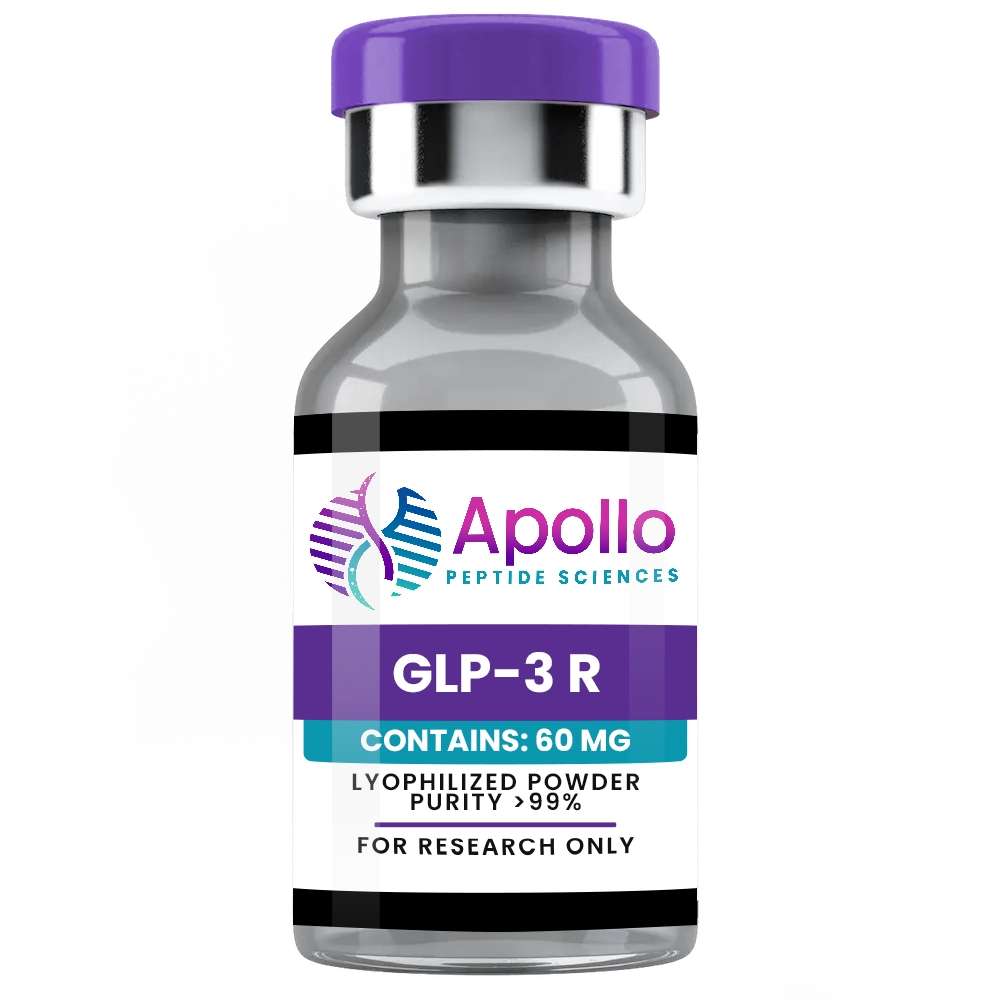
GLP-3 R 60mg
fat loss
Quality Rating

Buy GLP-3 R 60mg

Maximum retatrutide supply — for aggressive long-term triple-agonist fat loss at the highest dose

15-week supply at 4mgMaximum efficacy protocolTriple GLP-1/GIP/Glucagon

Who This Is For

Fully committed retatrutide users running extended 12–15 week protocols, or those pairing with CJC-1295/Ipamorelin who want uninterrupted fat loss coverage across a full GH cycle.

Retatrutide 60mg — Maximum Supply

Bulk supply for long-duration retatrutide protocols — best cost efficiency for sustained use at therapeutic doses above 8mg/week.

Supply at 12mg/wk

5 weeks

max Phase 2 dose

Supply at 6mg/wk

10 weeks

standard therapeutic

Max Phase 2 dose

12mg/week

clinical data limit

Cost per mg

Best in range

lowest unit cost

Glucagon ceiling

Self-limiting

GI tolerance governs dose

Protocol type

Advanced only

not for beginners

Overview & Benefits

Fifteen weeks at 4mg/week. Seven and a half weeks at 8mg/week. Five weeks at the Phase 2 maximum dose of 12mg/week. The 60mg retatrutide vial is the full commitment — a single purchase that covers an entire 4-month protocol at lower maintenance doses, or nearly two months at high-efficacy therapeutic dosing. This is what running retatrutide properly looks like. The TRIUMPH Phase 2 trial ran 48 weeks and produced its most dramatic results in participants who maintained consistent triple-agonist signaling throughout. The compounding thermogenic effect that distinguishes retatrutide from tirzepatide — glucagon-driven brown adipose tissue activation and hepatic fat oxidation — becomes more pronounced, not less, as the protocol extends. Week 12 results are meaningfully better than week 6. Week 24 results exceed week 12. The biology is cumulative, and the 60mg vial is built to support that cumulative effect without interruption. For users running the combination protocol — retatrutide for fat loss with CJC-1295/Ipamorelin for lean mass preservation — the 60mg vial provides practical alignment with GH peptide cycling. Standard GH secretagogue protocols run 12 weeks on, 4 weeks off. A single 60mg vial at 4mg/week covers that 12-week active phase with room to spare, allowing the fat loss mechanism to run continuously while the anabolic component cycles appropriately. This is the highest-sophistication body recomposition approach available in the catalog. The protocol commitment this vial represents also correlates with the outcomes worth pursuing. Four months of sustained triple-agonist signaling produces the hepatic fat reduction, cardiovascular marker improvements, insulin sensitivity restoration, and visceral fat elimination that represent real metabolic transformation — not just scale numbers, but changes that measurably reduce long-term disease risk.

Key Benefits

  • 15-week supply at 4mg/week — the full 4-month commitment for maximum cumulative results
  • Thermogenic compounding: glucagon-driven fat oxidation becomes more pronounced with extended use
  • Aligns with 12-week CJC-1295/Ipamorelin cycling for uninterrupted fat loss during GH cycles
  • Four months of sustained triple-agonist signaling for full metabolic transformation
  • Lowest cost-per-mg in the entire retatrutide catalog
  • Covers hepatic fat, visceral fat, insulin sensitivity, and cardiovascular markers — all improve with sustained dosing
  • The protocol duration that most closely mirrors the TRIUMPH trial sustained fat loss curve

Protocols & Dosing

Extended Triple-Agonist Protocol

Once weekly
4–12mg subcutaneous based on tolerance and response

Store unmixed at –20°C for up to 12 months. Reconstitute in 3ml bacteriostatic water. At 4mg/week: draw 0.2ml per injection from 3ml volume. Mark reconstitution date; use within 28 days. Pair with CJC-1295/Ipa for body recomp.

How Retatrutide Works: Triple GLP-1, GIP, and Glucagon Receptor Agonism

Retatrutide (LY3437943) simultaneously activates three distinct receptors: the GLP-1 receptor (GLP-1R), the GIP receptor (GIP-R), and the glucagon receptor (GCGR). This triple co-agonism produces mechanistically additive weight-loss effects that exceed any dual or single-receptor agonist. The 45-amino-acid peptide, derived from a glucagon backbone with engineered GLP-1R and GIP-R binding capabilities and a fatty acid-linked albumin-binding moiety, enables once-weekly dosing at a half-life of approximately 6 days. GLP-1R activation suppresses hypothalamic NPY/AgRP orexigenic signalling, upregulates POMC/CART satiety neuropeptides, enhances glucose-dependent insulin secretion, suppresses alpha-cell glucagon release, and delays gastric emptying. GIP-R co-agonism adds adipose-tissue lipolytic enhancement under caloric restriction, BAT thermogenesis via UCP1 upregulation, and central satiety reinforcement. GCGR agonism drives hepatic fatty acid beta-oxidation via CPT1 upregulation and ACC suppression, BAT thermogenesis via independent cAMP/UCP1 activation, VLDL secretion suppression, and a third orexigenic neuron-suppressing signal through hypothalamic GCGR neurons. This three-axis energy balance intervention—(1) triple central appetite suppression, (2) peripheral adipose lipolytic enhancement, (3) hepatic lipid combustion with thermogenic augmentation—creates a metabolic situation where energy expenditure is simultaneously elevated and energy intake is simultaneously depressed through three non-redundant mechanisms. This mechanistic redundancy is critical for sustained efficacy: as any single pathway undergoes partial receptor desensitisation over time, the remaining two pathways maintain pressure on adipose stores, explaining the non-plateauing trajectory in the phase-2 trial data. The hepatic GCGR-mediated effects deserve particular emphasis. Activation of the hepatic CREB/PGC-1alpha/PPAR-alpha transcriptional axis by glucagon creates a hepatocyte environment of elevated mitochondrial biogenesis, enhanced respiratory capacity, and maximal lipid oxidative throughput. Fatty acids mobilised from peripheral adipose tissue by GIP-R and GLP-1R activation are delivered to hepatocytes already primed for maximal oxidation, rather than being re-esterified or exported as VLDL. This hepatic capture-and-burn function is the molecular mechanism underlying retatrutide's extraordinary hepatic fat reductions and is the defining mechanistic feature that separates triple agonism from all prior pharmacological approaches.

Clinical Evidence: Retatrutide Phase-2 Data and Mechanistic Studies

The principal clinical dataset for retatrutide is the phase-2 dose-finding trial by Jastreboff et al., published in the New England Journal of Medicine in 2023. The trial achieved 24.2% mean body-weight reduction at 12 mg weekly over 48 weeks—the highest recorded in any randomised controlled trial of a pharmacological weight-management agent. The weight-loss trajectory had not reached a plateau at 48 weeks, and modelling projected continued loss in longer-duration protocols. Visceral adipose tissue declined by approximately 40%, hepatic fat by approximately 60% in subjects with baseline NAFLD, and comprehensive cardiometabolic biomarkers improved in dose-dependent fashion. Importantly, the phase-2 dose-response analysis confirmed that each dose increment from 1 mg to 12 mg produced additional weight loss, with no clear plateau in the dose-response relationship within the studied range. This absence of a pharmacological ceiling—rare among weight-management agents—suggests that higher doses or longer treatment durations may produce even greater outcomes, subject to tolerability constraints. Mechanistic studies from the phase-2 program confirmed additive contributions from all three receptor pathways, with selective antagonist experiments in preclinical models demonstrating that removing any single receptor engagement proportionally reduced outcomes. Phase-3 TRIUMPH program enrollment was active as of early 2026, with cardiovascular outcome data anticipated to follow primary efficacy results. Preclinical models of atherosclerosis suggest the GCGR component may provide additional vascular benefits through VLDL suppression and direct arterial wall GLP-1R effects, potentially positioning retatrutide for a MACE reduction advantage over tirzepatide when cardiovascular outcome data mature.

Key Studies

1

Jastreboff AM et al. N Engl J Med. 2023;389(6):514–526.

Retatrutide 12 mg produced 24.2% mean weight loss at 48 weeks with non-plateauing trajectory, suggesting potential for higher loss with longer treatment.

2

Coskun T et al. Mol Metab. 2022;57:101461.

Preclinical triple GLP-1/GIP/glucagon agonism produced synergistic metabolic benefits exceeding dual or single agonists, including hepatic fat clearance via PPAR-alpha activation.

3

Brandt SJ et al. Diabetes Obes Metab. 2018;20(9):2188–2200.

Glucagon receptor agonism specifically upregulated CPT1 and PPAR-alpha in hepatocytes, enhancing fatty acid oxidation capacity and explaining the hepatic fat reduction seen with retatrutide.

4

Ambery P et al. Lancet. 2018;391(10140):2607–2618.

Phase-2 GLP-1/glucagon dual agonist produced human clinical validation of the glucagon component's hepatic and thermogenic contributions.

5

Holst JJ, Rosenkilde MM. J Clin Endocrinol Metab. 2020;105(8):e2956–e2964.

Mechanistic review confirming non-redundant activation of independent downstream networks by GLP-1R, GIP-R, and GCGR—the scientific basis for retatrutide's additive outcomes.

6

McLean BA et al. Cell Metab. 2021;33(9):1750–1765.

Dual adipose-directed GIP/GLP-1 receptor co-agonism produced greater fat mobilisation than either agonist alone under controlled caloric restriction; the addition of GCGR further amplified this effect in triple-agonist models.

Safety Profile & Side Effects

Nausea

moderate

Approximately 45% incidence in phase-2 at high doses. At the sustained maintenance doses covered by the 60 mg bulk vial, subjects have established tolerability and residual nausea is typically low-grade.

Heart Rate Elevation

moderate

GCGR-mediated positive chronotropy persists throughout treatment. Mean increases of 3–5 bpm at therapeutic doses; cardiovascular monitoring is advisable for extended protocols.

Extreme Appetite Suppression

moderate

At maintenance doses in the 8–12 mg range, appetite suppression can reach levels that meaningfully impair voluntary caloric intake. Structured high-protein meal plans prevent nutritional deficiency.

Lean Mass Loss

moderate

At the extraordinary weight-loss magnitudes achievable with extended retatrutide protocols, lean mass preservation requires active resistance training and protein supplementation at above-typical levels.

Vomiting

moderate

Approximately 25% incidence in phase-2. At stable maintenance doses (the usage context for the 60 mg bulk vial), vomiting should be infrequent; persistent vomiting warrants dose re-evaluation.

Pancreatitis (rare)

high

Class-level precaution for all incretin-based therapies. Below 0.5% incidence; abdominal pain of unusual severity warrants evaluation.

Buyers Guide: Retatrutide 60 mg — Long-Cycle Bulk Supply for Maximum Efficacy

The 60 mg retatrutide vial is designed for experienced research subjects operating at maintenance doses of 8–12 mg weekly within extended multi-week protocols. At 8 mg weekly, 60 mg provides approximately 7–8 weeks; at 10 mg weekly, approximately 6 weeks; at 12 mg weekly, approximately 5 weeks. For 24-week extended protocols at maintenance doses—the minimum duration needed to approach the full weight-loss potential suggested by the phase-2 non-plateauing trajectory—two to three 60 mg vials represent the complete cycle supply. This bulk format delivers the best available per-dose economics and minimises protocol disruption from resupply logistics. Subjects at this stage are typically well past the tolerability-establishment and dose-titration phases and are focused on sustained protocol execution, body-composition monitoring, and metabolic biomarker tracking. The consistency of supply provided by the 60 mg bulk vial ensures that the steady-state plasma concentrations characteristic of retatrutide's weekly dosing are maintained without gaps that could disrupt the ongoing thermogenic-lipolytic metabolic state. Reconstituting a 60 mg vial into 5–6 mL bacteriostatic water and aliquoting weekly doses into pre-drawn insulin syringes stored at 4 °C is the recommended preparation approach, maintaining both dose accuracy and post-reconstitution peptide integrity across the full usage period. At this quantity level, quality verification demands the highest available documentation: batch-specific HPLC purity above 98%, mass spectrometry intact-molecule confirmation (~5,765 Da), full amino-acid sequence analysis, endotoxin below 1 EU/mg, sterility testing, residual solvent analysis per ICH Q3C, and temperature-excursion-logged cold-chain shipping documentation. Given retatrutide's novelty relative to semaglutide and tirzepatide, independent third-party laboratory verification of peptide identity and purity—rather than relying solely on supplier certificates—represents best practice for bulk purchases of this magnitude.

Retatrutide vs. Alternatives: The Maximum Efficacy Protocol
The 60 mg retatrutide bulk vial represents the highest-efficacy option currently available in the GLP-1 and incretin peptide research landscape. The approximately 24% mean weight loss in phase-2 data, combined with a non-plateauing trajectory suggesting even greater outcomes in extended protocols, places retatrutide in a class of its own relative to tirzepatide (20.9%, plateauing around week 72) and semaglutide (15%, plateauing earlier). For research designed to characterise maximum achievable pharmacological fat-mass reduction, retatrutide at full protocol doses is the scientifically indicated choice. The primary trade-off relative to tirzepatide and semaglutide remains evidence maturity: those agents have phase-3 data, cardiovascular outcome trials, and extensive real-world safety records that retatrutide does not yet possess. Researchers selecting retatrutide at the 60 mg bulk level are accepting this evidence uncertainty in exchange for maximum efficacy potential. This trade-off is appropriate for controlled research contexts with comprehensive monitoring protocols; it is not appropriate for unmonitored self-experimentation. Extended protocols using the 60 mg format should incorporate regular cardiovascular monitoring (resting ECG, blood pressure), metabolic panels (lipids, hepatic enzymes, glucose), and body-composition assessments to generate the safety-relevant data that will inform broader use of this novel compound.

Stack With These Peptides

CJC-1295 / Ipamorelin

CJC-1295 / Ipamorelin

performance

View →
IGF-1 LR3

IGF-1 LR3

performance

View →
BPC-157 10mg

BPC-157 10mg

healing

View →
GLP-3 R 60mg

Buy GLP-3 R 60mg

$589.99

Buy Now — $589.99Buy at Apollo

Research-grade · COA verified · Apollo Peptide Sciences
Categoryfat loss
Typeinjectable
Quality Rating★★★★★
VendorApollo

Common Questions About GLP-3 R

Why choose the retatrutide 60mg vial?

The 60mg vial is the maximum-supply option for long-duration retatrutide protocols. At 6mg/week it provides 10 weeks; at 8mg/week, 7.5 weeks; at 12mg/week (Phase 2 maximum), 5 weeks. It offers the lowest per-milligram cost and is intended for users fully committed to a complete 12–16 week protocol at therapeutic doses above 6mg/week.

What body weight loss can I expect from extended retatrutide use?

Phase 2 trial data showed up to 24% body weight reduction with sustained retatrutide at doses up to 12mg/week over approximately 24 weeks. At lower therapeutic doses (4–8mg/week), real-world results typically fall in the 15–20% range for users maintaining consistent protocols. The glucagon component's thermogenic effect compounds over time — longer protocols produce disproportionately better results than short runs.

Is retatrutide appropriate for beginners?

No. Retatrutide is an advanced compound intended for users who have prior experience with GLP-1 class peptides and understand GI side effect management, titration protocols, and lean mass preservation strategies. First-time GLP-1 users should start with semaglutide 5mg to establish GLP-1 tolerance before considering tirzepatide, and only consider retatrutide after completing at least one full tirzepatide protocol.

GLP-3 R 60mg

$589.99

Buy Now